
Rate Tips
Truth About Online Rate Quotes

Shopping for a mortgage online can be confusing.
You see one lender advertising a very low rate. Another promises “no lender fees.” A third claims to have the “lowest rates.” Naturally, you want to know one thing:
Who really has the best deal?
The problem is that an advertised mortgage rate rarely tells the whole story. To properly compare mortgage offers, you need to look at both the interest rate and the lender fees associated with getting that rate.
A Low Mortgage Rate Doesn't Always Mean a Low-Cost Loan
One of the biggest mistakes borrowers make is shopping based solely on the interest rate.
Mortgage rates and lender fees work together.
A lender may advertise an exceptionally low rate, but obtaining that rate could require paying discount points, origination fees or other lender charges.
Another lender might offer a slightly higher rate with substantially lower fees.
That is why I encourage borrowers to shop the loan price—not just the rate.
The real question isn't:
“What's your lowest rate?”
A better question is:
“What rate can I get, and exactly what will it cost me to get that rate?”
That's a much more meaningful comparison.
Why Advertised Mortgage Rates Can Be Misleading
Don’t be fooled by big lender & online ads
We all know it’s easy to be fooled by low “teaser” rates that are advertised on TV and online.
What you see lenders typically advertise is a one size fits all rate with some tiny disclaimer words you can hardly read or with TV and radio ads, they say it so fast you can't make it out. Doesn't sound like full disclosure to me!
The truth is-- even if that lowball lender is being honest (not always the case) that rate listed is the best they have for a perfect borrower and property scenario, about 1 in 20 people -- so it's unlikely to apply to you.
With that in mind, below is a list of unique factors that will affect the interest rate you would receive. As you can see - it would be almost impossible to obtain an accurate rate quote --until a loan officer applies these variables to determine a rate you and your scenario would qualify for.
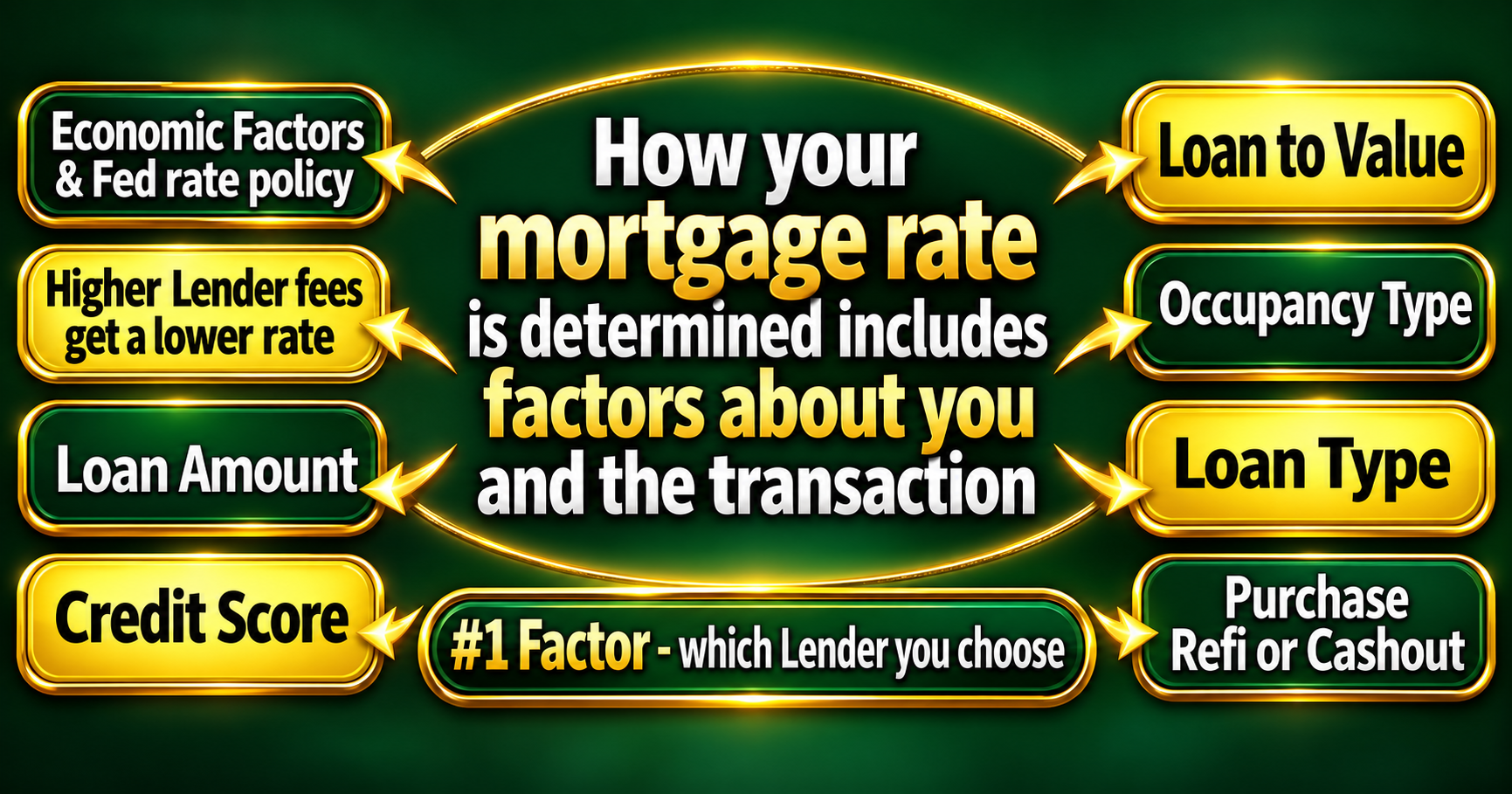
Credit score
Credit can have a significant effect on conventional mortgage pricing. Generally, stronger qualifying credit can result in better pricing.
Loan amount
The amount you're borrowing can affect available rates and pricing.
Down payment and loan-to-value
Your down payment determines your loan-to-value ratio, or LTV. On a refinance, LTV is based primarily on the loan amount compared with the property's value.
Different LTV ranges can have different pricing.
Loan program
Conventional, FHA, VA and USDA loans don't necessarily have the same interest rates or pricing.
The best program isn't automatically the one advertising the lowest rate. You need to consider the overall loan structure and your individual circumstances.
Loan term
A 15-, 20- and 30-year mortgage may each have different interest rates and costs.
Shorter-term mortgages often offer lower rates, although the monthly payment can be considerably higher because you're paying the loan off faster.
Fixed vs. adjustable rate
Fixed-rate mortgages maintain the same interest rate for the specified loan term.
Adjustable-rate mortgages, or ARMs, typically offer an initial fixed-rate period followed by periodic adjustments according to the terms of the loan.
Property type
A single-family home, condominium and manufactured home can price differently.
Property occupancy
Whether you're purchasing a primary residence, second home or investment property can also affect mortgage pricing.
That's a lot of variables—and it's why an online advertisement can't necessarily tell you what your mortgage rate will be.
Compare Mortgage Quotes at the Same Time
There's another major problem borrowers frequently overlook when rate shopping.
Suppose you get:
- Lender A's quote on Monday
- Lender B's quote on Tuesday
- Lender C's quote on Wednesday
You may think you're comparing three lenders.
You're not necessarily making an apples-to-apples comparison because the mortgage market may have changed between those quotes.
Mortgage rates can change from day to day and sometimes during the same day.
For the most accurate comparison, get competing quotes using the same loan scenario at approximately the same time.
The Rate That Matters Most Is the Rate You Can Actually Lock
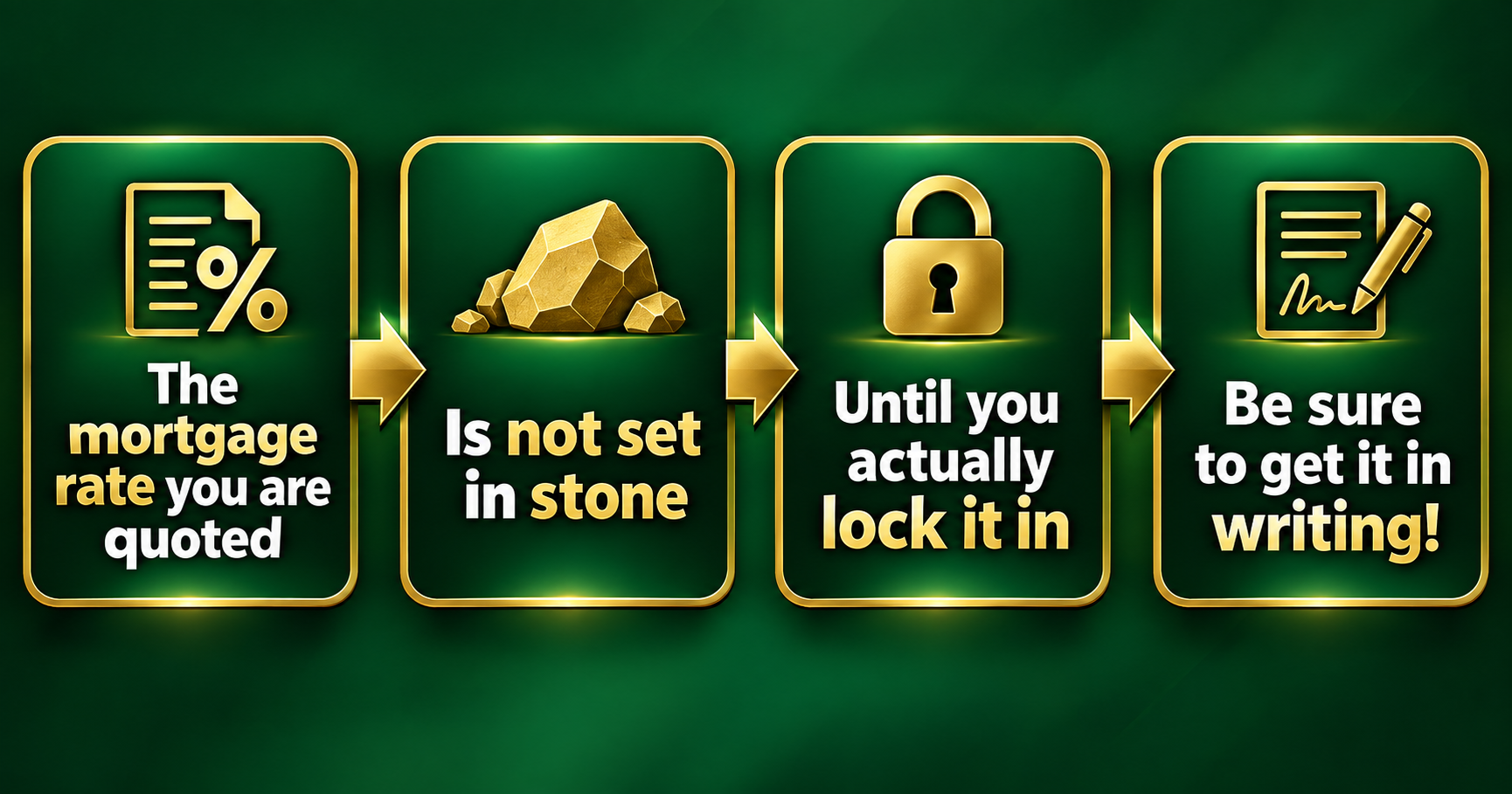
An online quote may look fantastic, but can you actually lock that rate under the terms advertised?
That's especially important when buying a home.
You might see a great rate today, but if you're not in a position to lock your loan today, that quote doesn't guarantee what will be available when you are ready.
The mortgage rate that ultimately matters is the rate and price available when you're actually ready and able to lock your loan.
Until then, rate quotes are useful for comparison and planning—but they aren't guarantees of future pricing.
Rate + Lender Fees = A Much Better Comparison
Think of mortgage pricing as having two major components:
1. The interest rate
This determines the interest charged on your loan and is a major factor in calculating your monthly principal and interest payment.
2. The cost to obtain that rate
Depending on the loan and lender, this may include discount points, origination charges and other lender fees.
You need to evaluate both.
For example, paying thousands of dollars in additional lender fees to reduce your rate slightly isn't automatically a good financial decision.
How long you expect to keep the mortgage matters.
The savings from the lower monthly payment need to be compared with the additional upfront cost.
Watch Out for a Rate That's Way Below Everyone Else
If four lenders are quoting rates within a relatively narrow range and one lender suddenly offers something dramatically lower, don't automatically assume you've found an incredible deal.
Investigate the details.
Ask:
Are there points? What are the lender fees? What assumptions were used? Is this rate actually available for my loan scenario? Can I lock it now?
Most importantly, request the numbers in writing so you can make a meaningful comparison.
Why Lender Markup Matters
Mortgage lenders operate in the same broad mortgage and capital markets, but they don't all price loans the same way.
Each lender has its own operating expenses, profit requirements, loan programs, pricing policies and margins.
That means two lenders can evaluate essentially the same borrower and transaction and still offer different combinations of rates and fees.
Large national lenders can have enormous advertising, staffing, technology and infrastructure expenses.
Smaller lenders and mortgage brokers may operate with lower overhead and can sometimes offer more competitive pricing.
But don't assume based solely on the size or name of the company.
Compare the actual numbers.
How to Shop for a Mortgage the Right Way
When comparing lenders, give each lender the same basic information and ask them to quote the same loan scenario.
Then compare:
- Interest rate
- Discount points
- Origination charges
- Other lender fees
- Loan program and term
- Monthly principal and interest payment
- Whether the rate is locked or floating
- Length of the rate-lock period
- Total estimated closing costs
Don't get distracted by costs that would generally be similar regardless of the lender, such as property taxes or homeowners insurance.
Focus particularly on the rate and lender-controlled charges.
Don't Shop the Rate—Shop the Loan Price

A mortgage is a major financial transaction. A tiny difference in rate or thousands of dollars in unnecessary lender fees can make a meaningful difference over time.
That's why the giant rate advertised on a website shouldn't be the deciding factor.
Look at the complete loan price.
Compare the interest rate and the lender fees required to obtain that rate. Make sure you're comparing the same loan program and assumptions at approximately the same time.
That's how you find out which lender is really offering the better deal.
Get a Second Opinion
Already have a mortgage quote from a bank, online lender or another mortgage company?
Get a second opinion before you lock.
I'll help you compare the rate, points and lender fees so you can see what you're actually paying—not just the number featured in the advertisement.
No sales pressure. Just a straightforward comparison of the numbers.
It could save you thousands.
Mortgage rates, loan programs and underwriting requirements are subject to change. Individual pricing depends on borrower, property, loan program and market conditions.
- #rate shopping
- #mortgage rates
- #First time home buyer
More Rate Tips guides
Disclaimer: Informative opinion based on decades of experience, not legal advice. Guidelines change and lenders differ in their interpretation and overlays — verify details with the lender handling your loan.