
Rate Tips
Mortgage Rate Secrets: What Lenders Don’t Always Explain
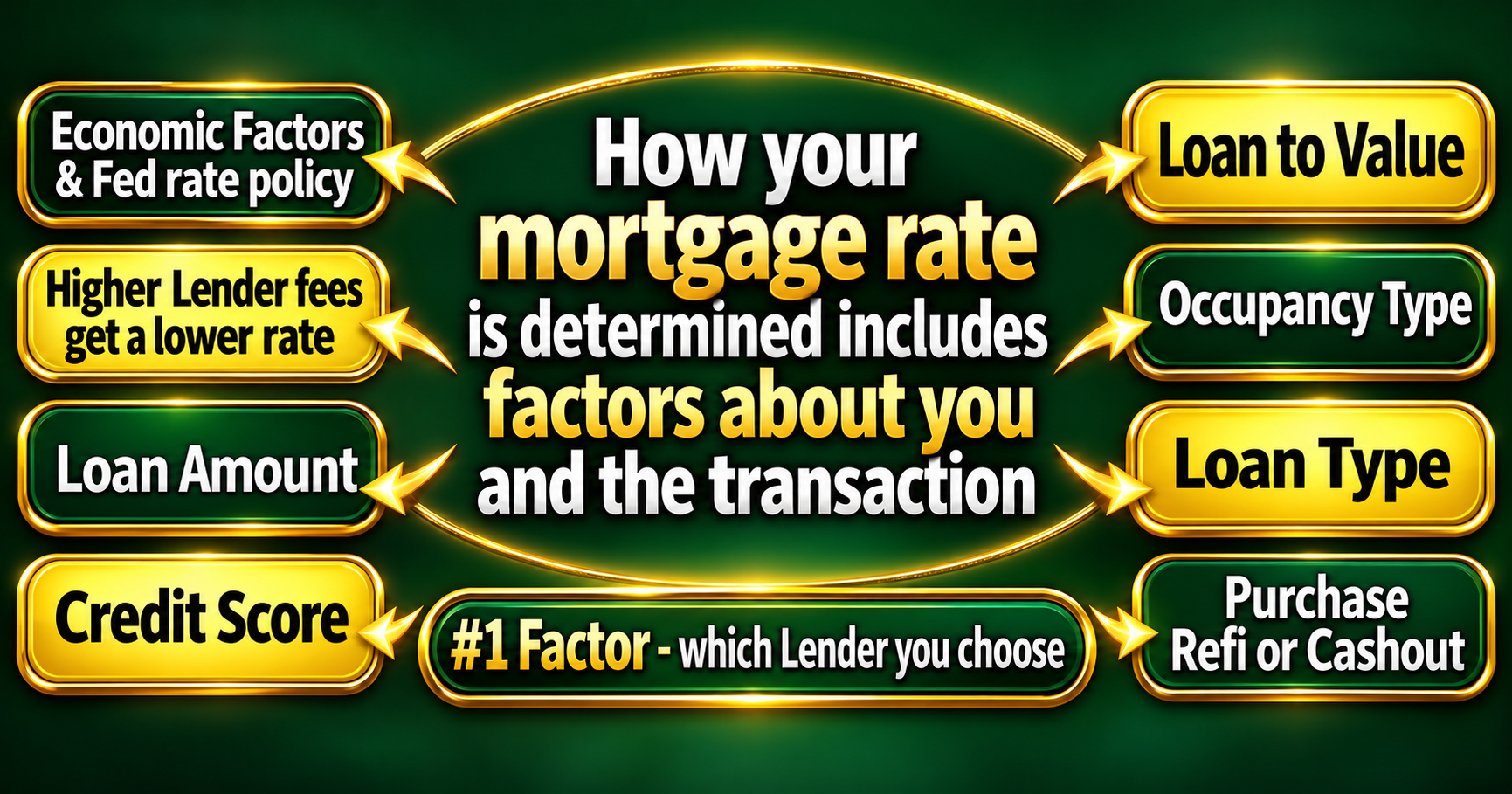
Rate Secrets You Need to Know
Mortgage rates are not one-size-fits-all. Your rate depends on the market, your financial profile, the property, the loan program, and—just as importantly—the lender fees associated with that rate.
What to know
- The economy and inflation drive overall mortgage rates
- Loan amount, down payment and LTV can affect your rate
- Shorter loan terms usually have lower rates
- Fixed and adjustable-rate mortgages work differently
- Different loan programs offer different rates and costs
- Higher credit scores generally qualify for better pricing
- Property type and occupancy can change your rate
- A lower rate may come with higher lender fees or points
- Compare rate quotes at the same time
- The rate that matters most is the rate you actually lock
- Compare the total loan price—not just the interest rate
- Lender overhead and markup can affect what you ultimately pay
1. The economy and inflation drive overall mortgage rates
Inflation expectations are one of the biggest influences on mortgage rates. When inflation is high or expected to rise, investors generally demand higher returns on mortgage-backed securities, which can push mortgage rates higher.
Employment reports, economic data and Federal Reserve policy can also influence the direction of mortgage rates.
2. Loan amount, down payment and LTV can affect your rate
Your loan-to-value ratio, or LTV, compares your loan amount with the property's value or purchase price, generally using the lower of the two.
With conventional financing, a larger down payment and lower LTV can often improve loan pricing. Loan amount can also affect the rate and pricing available to you.
3. Shorter loan terms usually have lower rates
Shorter-term mortgages, such as 15- or 20-year loans, generally offer lower interest rates than comparable 30-year mortgages.
The tradeoff is that paying the loan off faster usually results in a higher monthly principal-and-interest payment.
4. Fixed and adjustable-rate mortgages work differently
A fixed-rate mortgage keeps the same interest rate for the life of the loan.
An adjustable-rate mortgage, or ARM, typically offers a fixed rate for an initial period and then adjusts according to the loan terms and applicable market index.
5. Different loan programs offer different rates and costs
Conventional, FHA, VA and USDA loans can have different interest rates and fee structures.
Government-backed loans may offer attractive interest rates, but you should also consider mortgage insurance, funding fees and other program-specific costs. A lower interest rate does not automatically mean a lower overall loan cost.
6. Higher credit scores generally qualify for better pricing
Your credit profile can have a significant effect on mortgage pricing. In general, stronger credit scores qualify for more favorable rates and/or lower lender costs.
That is why improving your credit before applying for a mortgage can potentially save money over the life of the loan.
7. Property type and occupancy can change your rate
How you plan to use the property matters. A primary residence generally receives better pricing than a second home or investment property.
Property characteristics can also affect pricing. Condominiums, manufactured homes and certain rural or acreage properties may be priced differently depending on the loan program and lender guidelines.
8. A lower rate may come with higher lender fees or points
Mortgage rates and lender fees are directly connected. Paying additional points or lender fees can usually reduce the interest rate.
One point equals 1% of the loan amount. Before paying points, calculate how long it will take for the monthly payment savings to recover the additional upfront cost.
If you refinance or sell the home before reaching that break-even point, paying those additional points may not have produced a financial benefit.
9. Compare rate quotes at the same time
Mortgage rates can change daily—and sometimes during the same day.
Comparing one lender's Monday quote with another lender's Wednesday quote isn't an apples-to-apples comparison. Whenever possible, compare lenders at approximately the same time using the same loan amount, program, down payment and other assumptions.
10. The rate that matters most is the rate you actually lock
An advertised or preliminary rate quote isn't necessarily the rate you'll ultimately receive.
The rate and pricing available on the day you lock are what ultimately matter. Until your rate is locked, market movements can change your available options.

11. Compare the total loan price—not just the interest rate
Don't automatically choose the lender advertising the lowest interest rate.
Look at both sides of the equation:
Interest rate + lender fees/credits = loan price.
A lender can advertise a very low rate by charging significantly higher points or fees. Another lender may offer a slightly higher rate with much lower upfront costs.
Compare the combination of rate and lender costs so you can determine which option makes the most financial sense for your situation.

12. Lender overhead and markup can affect what you ultimately pay
Mortgage lenders generally obtain financing through the same broader mortgage capital markets, but their operating costs and profit margins can differ substantially.
Large organizations may have significant advertising, staffing and corporate overhead. Smaller lenders and mortgage brokers can operate with lower overhead in some cases.
The important comparison is what you are actually being offered: the interest rate, lender fees or credits, loan terms and total cost—not simply the size or name recognition of the lender.
Bottom line
There is much more to a mortgage rate than the number advertised online.
Your credit, down payment, loan amount, property, occupancy, loan program, term and current market conditions can all affect your pricing.
Most importantly, shop the loan price, not just the rate. Compare lenders at the same time and look carefully at both the interest rate and the lender fees required to obtain it.
- #mortgage rates
- #rate shopping
More Rate Tips guides
Disclaimer: Informative opinion based on decades of experience, not legal advice. Guidelines change and lenders differ in their interpretation and overlays — verify details with the lender handling your loan.