Rate Tips
Why is the loan price important?

Why Is the Loan Price Important?
When shopping for a mortgage, comparing interest rates alone can be misleading. Every mortgage rate comes with a cost—or sometimes a lender credit. Looking at both together gives you a much better way to compare your options.
What to Know
- A lower mortgage rate isn't always the better deal
- Rate + lender cost = your loan price
- Calculate the break-even point before paying discount points
- Consider how long you'll actually keep the loan
- A lender credit can reduce your upfront costs
- Your mortgage pricing is unique to your situation
- Compare the Loan Estimate—not just the advertised rate
- Shop the loan price, not just the rate
1. A Lower Mortgage Rate Isn't Always the Better Deal
Most borrowers naturally want the lowest interest rate because a lower rate generally means a lower monthly principal and interest payment.
But a lower rate may require you to pay more money upfront through discount points or lender fees. A slightly higher rate may come with substantially lower upfront costs—or even a lender credit.
That's why the lowest rate isn't automatically the lowest-cost mortgage.
2. Rate + Lender Cost = Your Loan Price
Think of mortgage pricing as a sliding scale:
Lower rate → Usually higher upfront cost
Higher rate → Usually lower upfront cost or potentially a lender credit
Neither option is automatically better. The right choice depends on the upfront cost, monthly payment, your financial priorities and how long you expect to keep the mortgage.
The key concept is simple:
Interest rate + lender cost = loan price.
3. Calculate the Break-Even Point Before Paying Discount Points
If you're considering paying extra upfront for a lower rate, determine how long it will take for the monthly savings to recover that additional cost.
For example, suppose a lower rate costs an additional $4,000 but saves you $80 per month.
$4,000 ÷ $80 = 50 months
Your break-even point is approximately 4 years and 2 months.
If you keep the mortgage longer than that, paying the additional upfront cost may make sense. If you sell or refinance before then, you may never recover the extra money you paid.
4. Consider How Long You'll Actually Keep the Loan
How long you plan to own the house isn't necessarily the same as how long you'll keep the mortgage.
You could refinance if rates fall, sell the property, move, convert the home to a rental or replace the mortgage for another financial reason.
If there's a reasonable chance you'll replace the loan before reaching your break-even point, paying substantial discount points for a lower rate may not be worthwhile.
If you expect to keep the same mortgage for many years, however, paying upfront for a lower rate could produce meaningful long-term savings.
5. A Lender Credit Can Reduce Your Upfront Costs
Mortgage pricing can work in the opposite direction as well.
Instead of paying additional money for a lower rate, you may be able to accept a slightly higher rate in exchange for a lender credit that helps cover eligible closing costs.
You'll generally have a somewhat higher monthly payment, but you'll need less money upfront.
This can be particularly useful when minimizing cash needed at closing is a priority.
6. Your Mortgage Pricing Is Unique to Your Situation
The mortgage rates you see advertised online aren't necessarily the rates or pricing you'll receive.
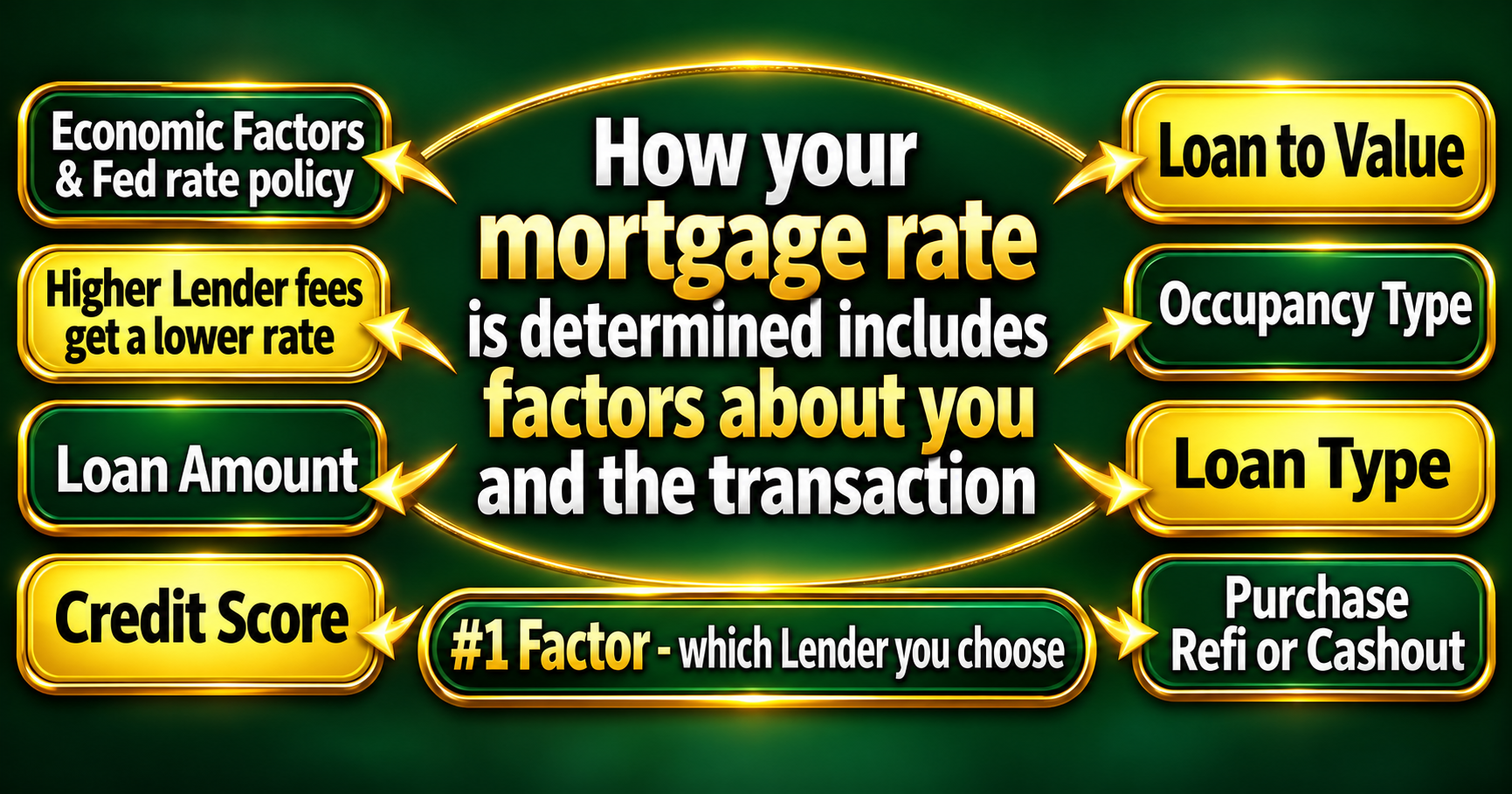
Your actual mortgage pricing can be affected by your credit profile, loan amount, down payment, loan-to-value ratio, property type, occupancy, loan program, loan term, transaction type, discount points, lender credits and current mortgage-market conditions.
That's why comparing two advertised interest rates without also comparing their associated costs can give you an inaccurate picture of which lender is actually offering the better deal.
7. Compare the Loan Estimate—Not Just the Advertised Rate
When comparing mortgage offers, don't focus only on the interest rate.
Look closely at lender-controlled costs associated with obtaining that rate, including discount points, origination charges and lender credits.
The Loan Estimate can make comparison shopping easier because lenders generally disclose loan terms and costs in a standardized format.
For the most accurate comparison, make sure you're comparing similar loan scenarios at roughly the same time. Mortgage pricing can change quickly, so a quote received in the morning may not be directly comparable to one received later in the day.
8. Shop the Loan Price, Not Just the Rate
The lowest advertised mortgage rate isn't automatically the best mortgage.
Sometimes paying more upfront for a lower rate makes excellent financial sense. Other times, choosing a slightly higher rate with lower upfront costs is the smarter financial decision.
The key is to compare the interest rate and lender costs together, calculate your break-even point and consider how long you're realistically likely to keep the mortgage.
Shop the loan price, not just the rate.
Get a Second Opinion Before You Lock
Small differences in mortgage rates and lender costs can potentially add up to thousands of dollars.
Before choosing a mortgage based solely on the interest rate, have the numbers compared side by side. A clear comparison of the rate, lender costs, monthly payment and break-even point can help you determine which option actually makes the most financial sense for you.
No sales pressure—just straightforward numbers so you can make an informed decision.
- #rate shopping
- #First time home buyer
- #mortgage rates
More Rate Tips guides
Disclaimer: Informative opinion based on decades of experience, not legal advice. Guidelines change and lenders differ in their interpretation and overlays — verify details with the lender handling your loan.