
Rate Tips
What drives mortgage rates to change?
What Drives Mortgage Rates to Change?
Mortgage rates can seem unpredictable. They can change from one day to the next—and sometimes even during the same day. The rate you’re quoted may also be very different from the mortgage rates you see advertised.
Why? Because mortgage rates are influenced by several moving parts, including financial markets, the lender you choose, and your individual loan scenario.
What to know
The economy and inflation influence mortgage rates — Strong economic growth and rising inflation generally put upward pressure on rates, while economic weakness and falling inflation can help push rates lower.
Mortgage-backed securities play a major role — Mortgage rates are closely connected to the price and demand for mortgage-backed securities, commonly called MBS.
The Federal Reserve influences—but does not directly set—mortgage rates — Fed policy can affect investor expectations and financial markets, which can then influence mortgage rates.
Economic news can move rates quickly — Inflation reports, employment data and other economic reports can cause mortgage rates to move, especially when the results differ from what investors expected.
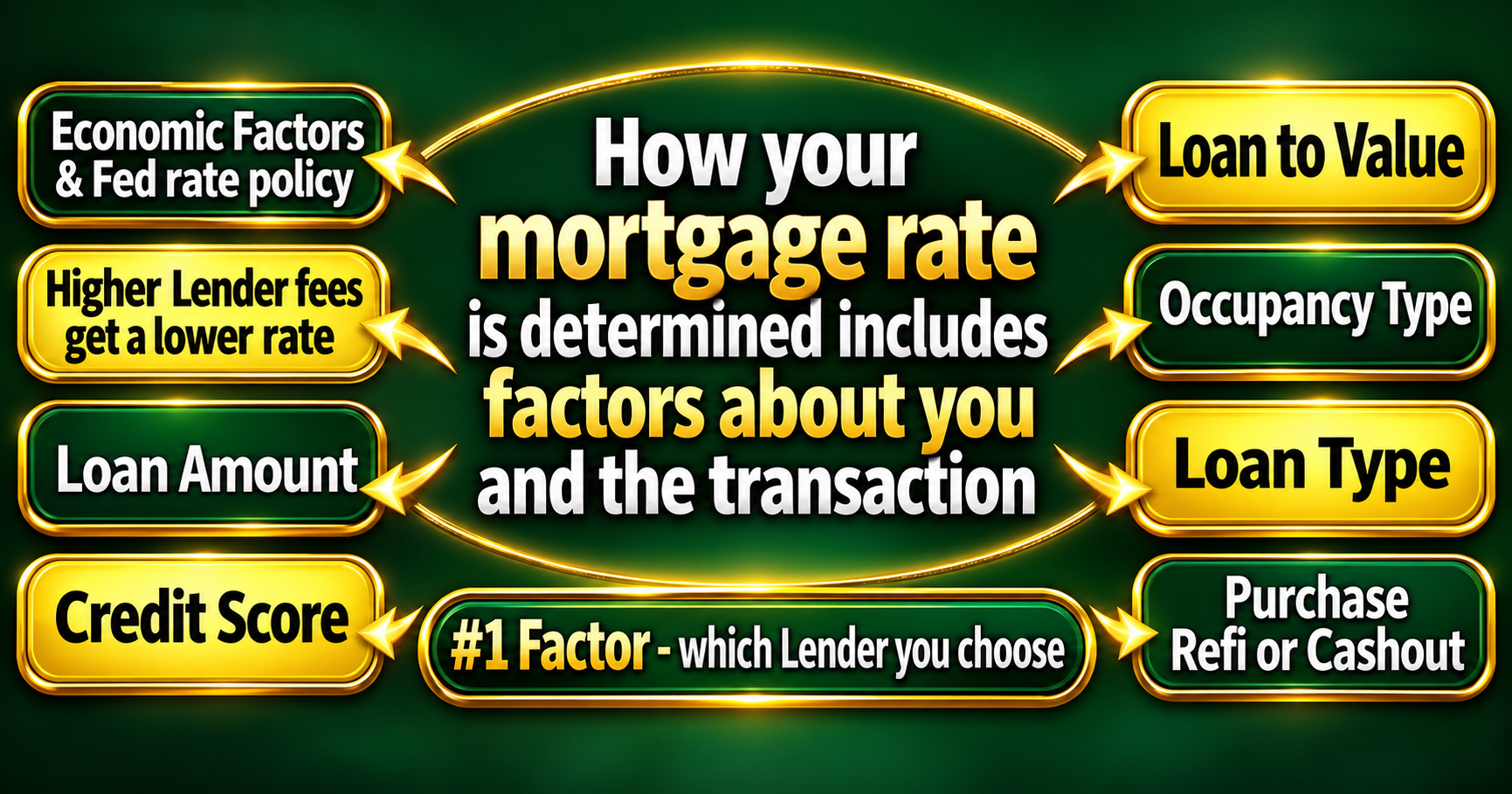
Your lender matters — Different lenders have different pricing strategies, profit margins and operating costs, so the same borrower can receive different pricing from different lenders.
Your individual loan scenario affects your rate — Credit score, loan type, down payment, property type, occupancy and other factors can affect the rate and loan price available to you.
1. The economy and inflation influence mortgage rates
The overall strength of the U.S. economy helps determine whether we're in a relatively high-rate or low-rate environment.
When the economy is strong and inflation is rising, mortgage rates generally face upward pressure. When economic conditions weaken and inflation is falling, mortgage rates may have room to move lower.
Inflation is especially important because investors want the return on long-term investments to keep pace with rising prices.
2. Mortgage-backed securities play a major role
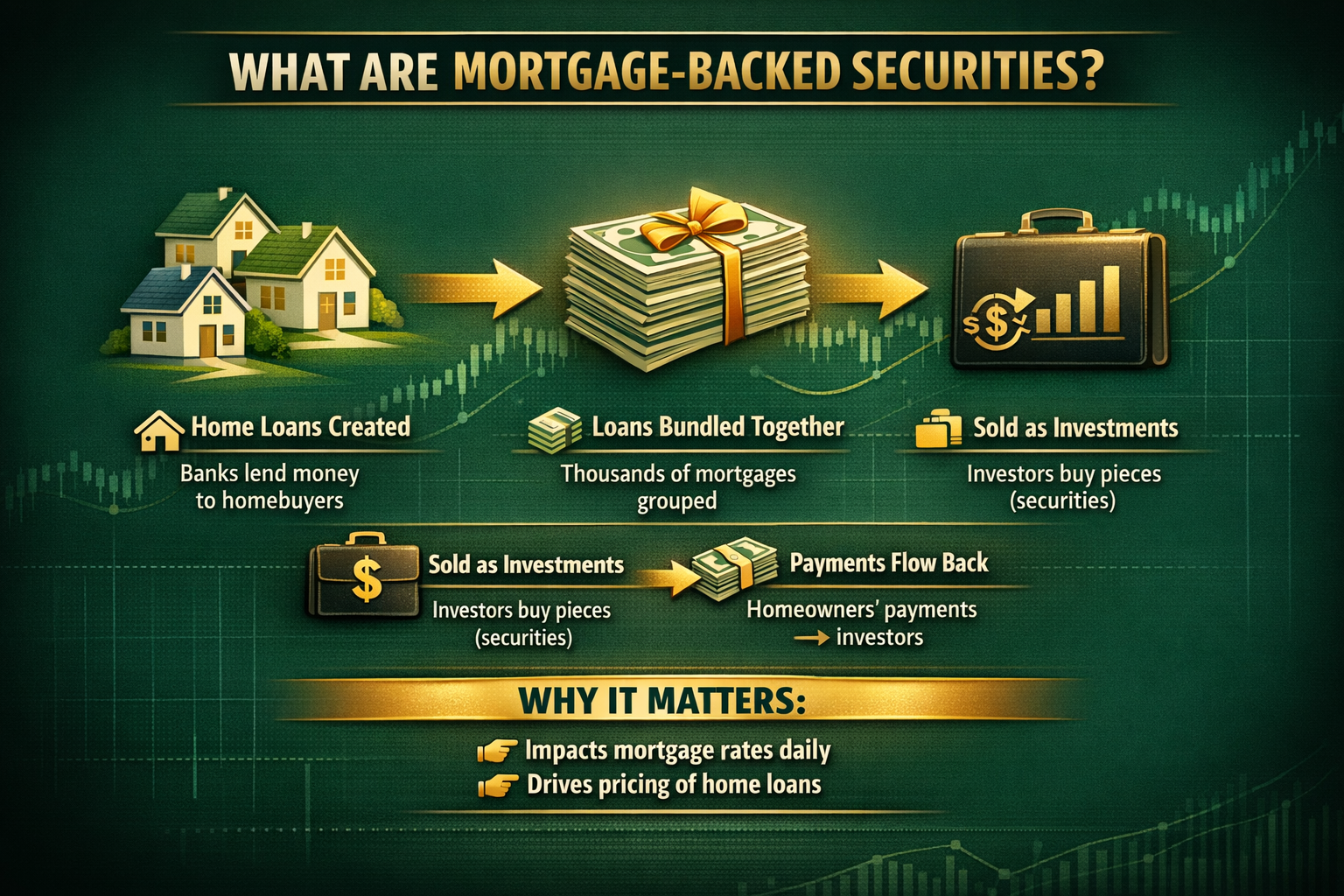
Most mortgage lenders don't keep home loans forever. After closing, many mortgages are bundled together and sold into the secondary mortgage market as mortgage-backed securities, or MBS.
Mortgage lenders closely watch MBS prices when determining their rates and pricing.
When investor demand for mortgage-backed securities increases, MBS prices generally rise and mortgage rates tend to fall. When demand weakens and MBS prices decline, mortgage rates generally face upward pressure.
Because MBS trade throughout the day, mortgage pricing can change quickly. On volatile days, lenders may even adjust their rates more than once.
3. The Federal Reserve influences—but does not directly set—mortgage rates
One of the biggest misconceptions about mortgage rates is that the Federal Reserve directly sets them.
It doesn't.
The Fed controls certain short-term interest rates and uses monetary policy to influence economic activity and inflation. Those actions can affect investor expectations and the bond and mortgage-backed securities markets.
As a result, Fed decisions can influence mortgage rates even though there is no direct one-for-one relationship between a Fed rate change and a mortgage rate change.
The Fed can also affect mortgage markets through purchases or sales of mortgage-backed securities.
4. Economic news can move rates quickly
If you're shopping for a mortgage rate, pay attention to economic news—especially inflation.
A stronger-than-expected economic report or hotter-than-expected inflation report can put upward pressure on mortgage rates.
A weaker-than-expected report or evidence that inflation is cooling can have the opposite effect.
The important word is "expected." Financial markets often react not simply to whether economic news is good or bad, but to how the actual numbers compare with what investors were expecting.
That's one reason mortgage rates can move unexpectedly and sometimes very quickly.
5. Your lender matters
Market conditions are only part of the mortgage rate equation.
Different mortgage companies can offer different pricing for essentially the same loan. Lenders have different overhead, profit requirements, pricing strategies and appetites for particular types of loans.
That's why comparing lenders can be important. Don't assume that every lender will offer the same rate—or the same cost for that rate.
A lower advertised rate isn't necessarily the better deal if it requires substantially higher upfront lender fees or discount points.
6. Your individual loan scenario affects your rate
Finally, mortgage pricing depends on you and the details of your transaction.
Your credit profile, loan program, loan amount, down payment or equity, property type, occupancy and other characteristics can all affect the pricing available for your loan.
This is why advertised mortgage rates should be viewed as a starting point rather than a guarantee of what you'll actually receive.
The best comparison is based on your specific transaction and should consider both the interest rate and the upfront cost required to obtain that rate.
Bottom line
Mortgage rates aren't controlled by one person, one lender or one government agency. They're influenced by the economy, inflation, investor demand for mortgage-backed securities, Federal Reserve policy, economic reports, lender pricing and your individual loan characteristics.
And because markets can change quickly, rates can rise or fall with little warning.
When comparing mortgage offers, don't look at the interest rate alone. Compare the rate and the cost to obtain that rate so you can see the true loan price and make a better apples-to-apples comparison.
- #mortgage rates
- #rate shopping
More Rate Tips guides
Disclaimer: Informative opinion based on decades of experience, not legal advice. Guidelines change and lenders differ in their interpretation and overlays — verify details with the lender handling your loan.