
Agent Loan Tips
Well & Septic Systems-what agents need to know
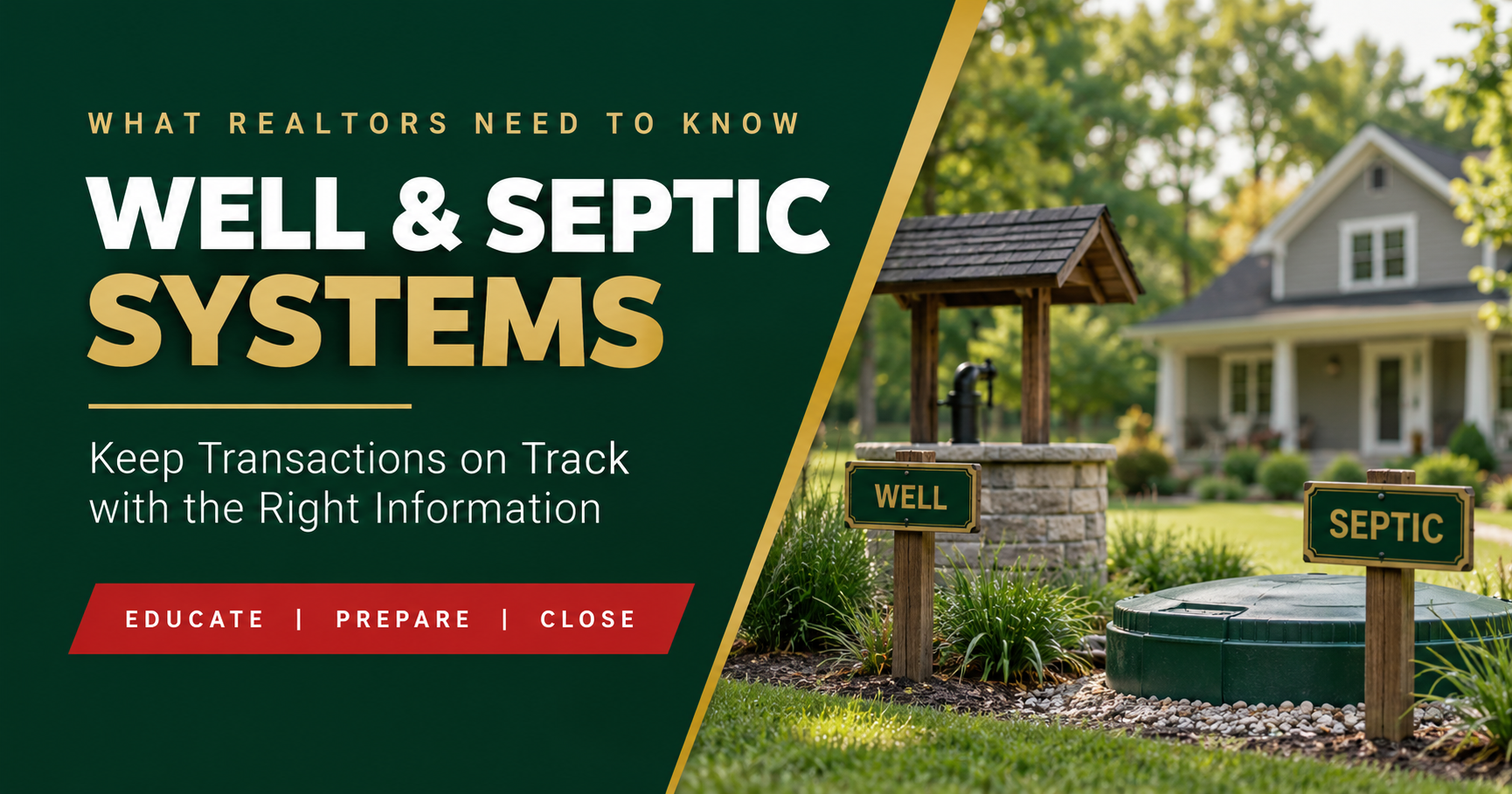
Well & Septic Systems — What Agents Need to Know
Homes with private wells and septic systems are common, especially in rural and semi-rural areas. They typically present no financing problems, but the loan requirements can vary depending on the mortgage program & appraisal findings.
For agents, the key is identifying potential well and septic issues early. A problem discovered late in the transaction can mean additional inspections, testing, repairs, documentation, and possibly closing delays.
What to know
- Conventional financing is generally the most flexible when it comes to private wells and septic systems.
- FHA, VA, and USDA financing may require additional water testing, inspections, documentation, or property standards.
- Well location matters. The distance between the well, septic system, property lines, and possible contamination sources can become a loan issue.
- Shared wells and other shared systems may require acceptable legal agreements covering access, maintenance, and repairs.
- An appraiser can trigger additional requirements if there are signs of a problem with the well, septic system, or water supply.
- A standard home inspection may not provide the same evaluation as a dedicated well or septic inspection.
- Ask questions early. Finding out how the property gets its water and handles sewage before the appraisal can help prevent surprises later.
- When representing a seller, knowing the condition and history of the well and septic system can help you prepare the property for buyers using different types of financing.
What Realtors Should Know About Well & Septic Properties
A property with a private well or septic system isn't necessarily difficult to finance. The potential problems usually come from discovering something late in the transaction that should have been addressed earlier.
That is why Realtors should identify the property's water and sewage systems as early as possible and communicate that information to the buyer's loan officer.
1. Conventional Financing Is Generally More Flexible
Conventional loans typically have fewer automatic well and septic requirements than government-backed financing.
If the systems appear to be functioning properly and the appraisal does not identify a concern, additional inspections or testing may not always be required by the loan program.
However, an appraiser or lender may call for additional evaluation when there are indications of problems such as unusual odors, sewage backup, questionable water quality, low water pressure, visible system issues, or nearby contamination hazards.
For Realtors, this means a well-maintained property with properly functioning systems may move through conventional financing relatively smoothly.
2. FHA, VA and USDA Can Have Additional Requirements
Government-backed loan programs may apply additional property standards to homes using private water and sewage systems.
Depending on the loan program and circumstances, this can include water-quality testing, verification that the septic system is functioning properly, documentation from local authorities, or confirmation that the systems comply with applicable standards.
Don't assume that because a property worked with one type of financing in the past, it will automatically meet the requirements of another loan program today.
If your buyer is using FHA, VA, or USDA financing, get the loan officer involved early.
3. Well Location Can Matter
The physical location of the well can become important during financing.
A lender or loan program may need to consider the distance between the well and items such as the septic tank, drain field, property lines, or potential sources of contamination.
This can become particularly important with older properties or rural parcels where systems were installed many years ago and prior to current local agencies rules.
A perfectly functioning well can still create a financing issue if its location does not satisfy applicable requirements.
For a listing with a private well, knowing where the well and septic components are located before accepting an offer can be valuable.
4. Shared Systems May Need Legal Agreements
Some properties use private shared wells or water systems rather than an individual private well.
When a system is shared between properties, financing may require documentation establishing each owner's rights and responsibilities.
The agreement may need to address issues such as access, maintenance, repairs, costs, and continued use of the system.
If you're listing a property with a shared well, locate the recorded or written agreement early rather than waiting for underwriting to request it.
5. The Appraisal Can Trigger Additional Requirements
Even when a loan program does not automatically require a well or septic inspection, the appraisal can change things.
If the appraiser observes something that suggests the water supply or septic system may not be functioning properly, additional inspections, testing, repairs, or documentation could be required before the loan can close.
This is another reason Realtors should look for obvious warning signs before the appraisal is completed.
Resolving a potential issue before the appraisal is usually much easier than dealing with it days before closing.
6. A Home Inspection Isn't Necessarily a Well or Septic Inspection
A standard home inspection may provide basic observations about the property's systems, but buyers may need separate professionals to thoroughly evaluate a private well or septic system.
A dedicated well inspection may evaluate water supply, equipment, pressure, and other system components. Water-quality testing may also be appropriate or required.
A septic inspection can provide additional information about the condition and operation of the system.
Even when the mortgage program doesn't require these inspections, buyers may still choose to have them performed as part of their due diligence.
7. Ask the Right Questions Early
When you see "private well" or "septic" in a listing, don't wait until loan underwriting to start asking questions. Try to determine early:
- Is the water source a private well, shared well, or community system?
- Is the property connected to a private septic system?
- Where are the well, septic tank, and drain field located?
- Are there maintenance or inspection records available?
- Has the well water been tested recently?
- When was the septic system last inspected or pumped?
- Are there known problems with either system?
- If the well is shared, is there an acceptable written agreement?
Getting this information early gives the buyer, lender, inspectors, and agents more time to address potential problems.
8. Listing Agents Can Prepare Before the Buyer Arrives
If you're listing a home with a private well or septic system, doing a little homework before accepting an offer can help protect the transaction.
Find out what type of systems the property has, locate available permits and maintenance records, identify any shared-system agreements, and ask the seller about recent inspections, pumping, water testing, repairs, or known issues.
This information can become especially important if the eventual buyer uses FHA, VA, or USDA financing.
The goal isn't to make a well or septic property complicated. It's to prevent an avoidable issue from becoming a last-minute closing problem.
The Realtor Takeaway
Private wells and septic systems are common and usually aren't a reason to avoid a property.
The key is recognizing that mortgage requirements can vary depending on the buyer's loan program and the specific characteristics of the property.
When you identify the systems early, gather available information, and involve the buyer's loan officer before problems surface, you give everyone more time to solve potential issues.
That can mean fewer surprises, fewer last-minute conditions, and a smoother closing for your client.
Agent tip: If you're unsure whether a property's well or septic setup will work with your buyer's financing, send the property details to the loan officer early. It is much better to identify a potential financing issue before the buyer spends money on inspections and appraisal.
- #agent loan tips
- #Property condition
More Agent Loan Tips guides
Disclaimer: Informative opinion based on decades of experience, not legal advice. Guidelines change and lenders differ in their interpretation and overlays — verify details with the lender handling your loan.