
Agent Loan Tips
Manufactured Home Red Flags

Manufactured Home Red Flags
Financing a manufactured home can be more complicated than financing a traditional site-built home. Property condition, HUD documentation, foundation requirements, prior moves, land ownership and even the lender you choose can affect whether the home qualifies.
Knowing the potential red flags before making an offer can save time, money and frustration.
What to know
- HUD tags, data plates and the age of the home matter
- The foundation and skirting must meet loan requirements
- Loan programs have different down payment and eligibility rules
- The manufactured home usually needs to be on land you own
- A home that has been moved a second time can be a major problem
- Structural modifications and additions need proper approval
- The appraisal needs acceptable manufactured-home comparable sales
- Flood zones and required flood insurance can create financing issues
- Repair escrows may not be available
- Second dwellings and ADUs can complicate financing
- Certain property types and uses may not qualify
- Lender overlays can be just as important as the basic loan guidelines
1. HUD Tags, Data Plates and the Age of the Home
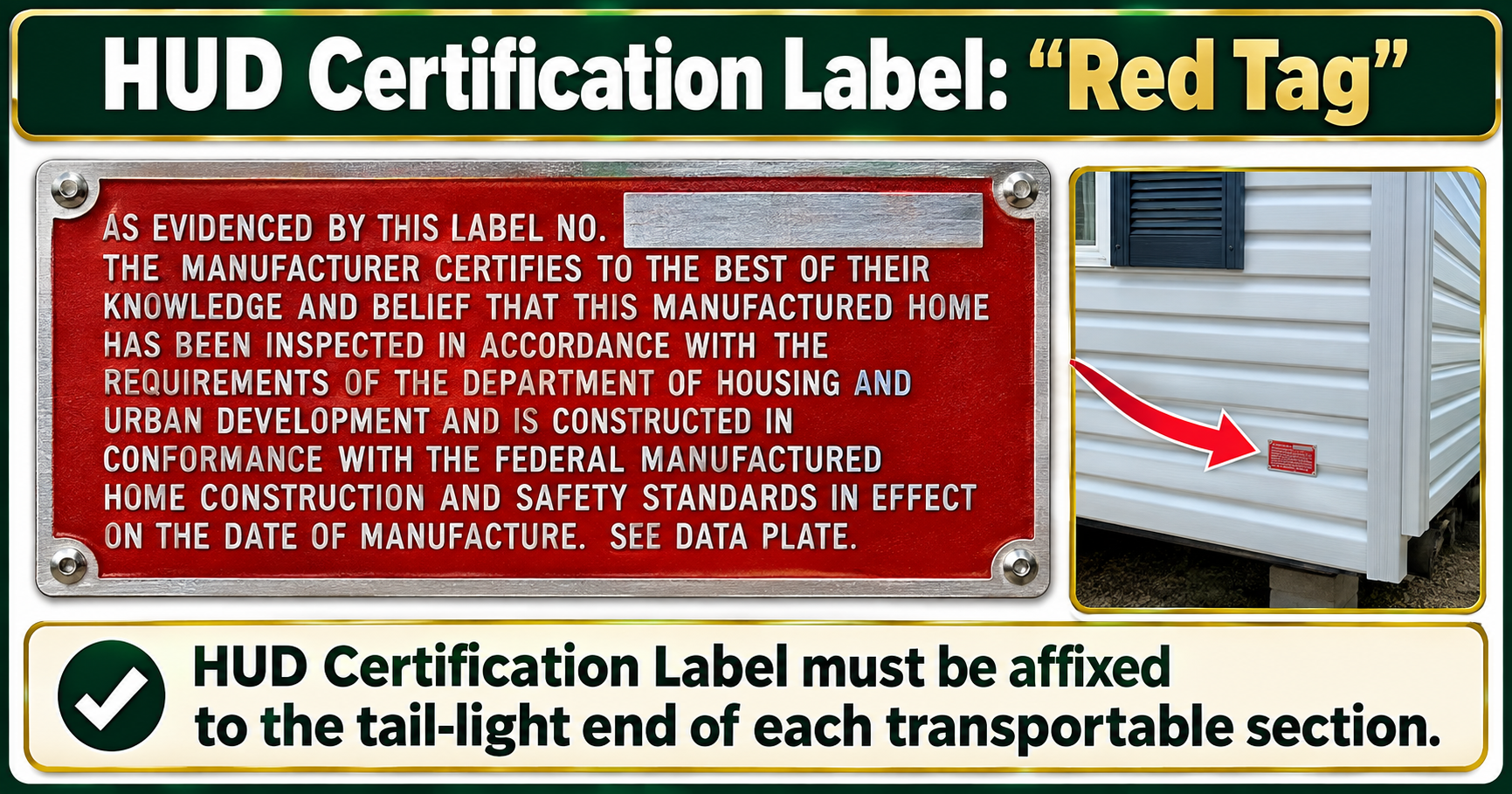
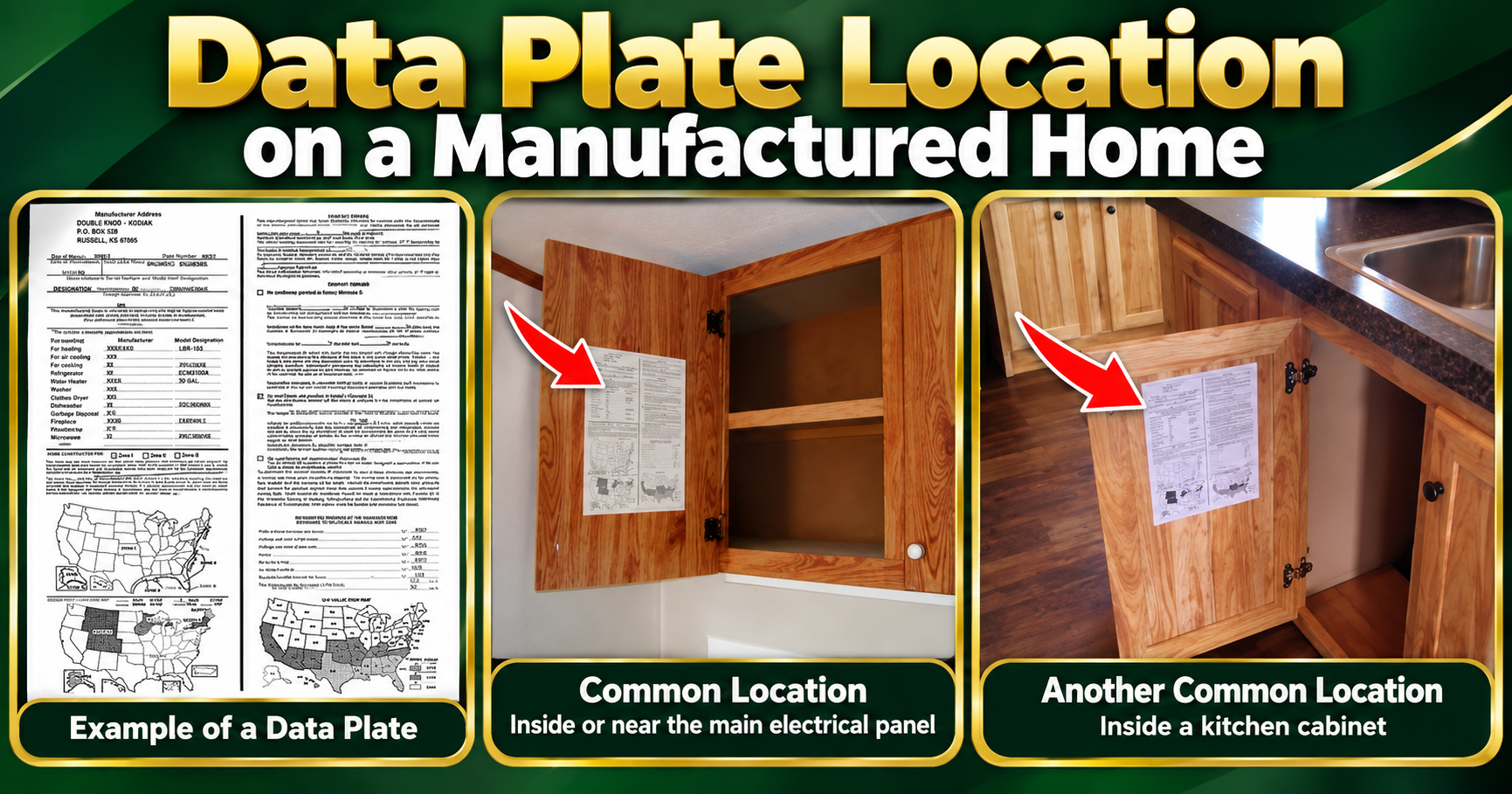
Manufactured homes must have been built on or after June 15, 1976 to be eligible for conventional and government loans. They were shipped from the factory with HUD certification labels attached to the exterior of each unit, commonly called HUD tags, along with a data plate located in the interior of the home..
Missing HUD tags or data plates don't necessarily end the transaction, but they can create additional documentation requirements and delays. FYI --Some lenders also impose their own age restrictions beyond the basic loan-program requirements.
2. Foundation and Skirting Requirements
A foundation certification from a licensed professional engineer may be required on conventional and VA, and is almost always mandatory on FHA and USDA loan types.
Foundation skirting must also meet applicable requirements. Non-load-bearing skirting generally needs to be permanently attached to appropriate backing and provide ventilation. FHA has specific perimeter enclosure requirements, and vinyl skirting by itself may not be acceptable.
The tow hitch and running gear must also be removed.
3. Loan Program and Down Payment Rules
Manufactured-home financing varies significantly by loan program.
Conventional financing may allow up to 95% loan-to-value on an owner-occupied purchase, with certain exceptions to 97% LTV on qualifying MH Advantage homes (currently very few manufactured homes are MH Advantage).
FHA financing may allow up to 96.5% loan-to-value. Some down payment assistance programs will not allow manufactured homes.
VA financing may allow eligible borrowers to purchase with zero down, although individual lenders may impose more restrictive requirements.
USDA financing may be available for qualifying manufactured homes, but additional age and property requirements can apply.
Second homes may be eligible for conventional financing with larger down payments and potentially higher interest rates and mortgage insurance costs.
4. Land Ownership and Property Classification
Traditional manufactured-home financing generally works best when the borrower owns both the home and the land.
Homes located in mobile home parks where the land is leased do not qualify for traditional real estate mortgage programs. Leasehold properties and manufactured-home condominium projects may be eligible, but can also be difficult to finance.
5. A Second Move Can Be a Major Problem
A manufactured home that was installed at one location and later moved to another location can be very difficult to finance.
Most traditional loan programs generally will not finance a manufactured home after a second move. VA financing may provide an exception under certain circumstances, although additional inspections and lender requirements may apply.
Freddie Mac made a recent change and MAY allow a second move on conventional, however there will likely be additional inspections from a licensed structural engineer and other professionals to ascertain that second move did not damage the structural stability of the manufactured units.
Always determine whether the home has ever been relocated before making an offer.
6. Structural Modifications and Additions
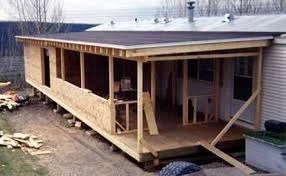
Structural changes to an existing manufactured home can create financing problems when they were completed without proper approval. Modifications should generally be approved by a licensed professional engineer or the appropriate local building department, with permits obtained when required.
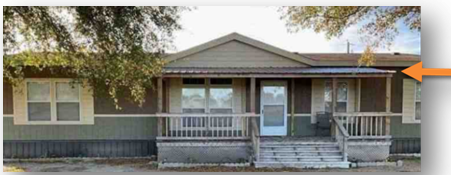
Unpermitted additions or alterations should be investigated early in the transaction. Below are some common examples of deck and porch add ons.
Porch and deck examples
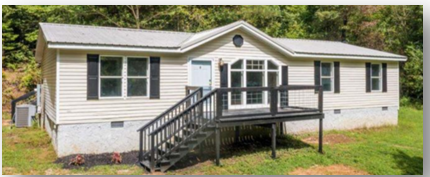
When a manufactured home has a porch or deck addition, the appraisal photos will be reviewed to determine if the roof or foundation was altered to complete the addition. When the roof or foundation has been altered, this must be treated as an addition.
Example 1: The home has a deck across the front of the house and there are modifications to the roof. This would be considered a structural modification and may require additional documentation
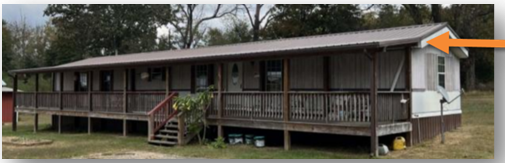
Example 2: The home has a porch that has been built and there are modifications to the roof. This would be considered a structural modification and may require additional documentation.
Example 3: The home has an added deck but there are no structural modifications to the home as the roof was not altered. Additional documentation is not required
7. Manufactured-Home Comparable Sales Matter
The appraisal needs appropriate manufactured-home comparable sales.
For a multi-wide manufactured home, lenders may require at least two manufactured-home closed sales in the appraisal report.
For a single-wide home, when the lender allows this property type, the appraisal generally needs at least one comparable single-wide sale.
A lack of acceptable manufactured-home comparable sales can make financing difficult.
8. Flood Zones Can Create Financing Problems
Required flood insurance can complicate manufactured-home financing, particularly with certain FHA transactions.
Depending on the property and loan program, an elevation certificate or flood-map amendment may be necessary. These can add expense and may not always resolve the financing issue.
Flood-zone status should be investigated early whenever there is a concern.
9. Repair Escrows May Not Be Available
Manufactured homes needing repairs can present another challenge.
Conventional manufactured-home loans generally have limited options for allowing lender-required repairs to be completed after closing.
FHA, VA and USDA programs may permit certain repair escrows, but availability depends on the circumstances and the lender.
10. Second Dwellings and ADUs
A second structure on the property can significantly affect financing.
A vacant manufactured home used only for storage may sometimes be acceptable if it is not connected as a functioning residence and doesn't create a health or safety issue. An appraiser would typically be the one who determines this.
Accessory dwelling units, or ADUs, require additional review. Eligibility varies by loan program, the type of ADU and whether the primary residence or ADU is itself manufactured housing.
11. Property Types and Uses That Can Cause Problems
Manufactured homes are generally not eligible for investment-property financing. There are some DSCR lenders that will allow a manufactured investment property but the LTV will be lower and the rate substantially higher than current market rates on traditional loans.
Two- to four-unit manufactured properties can also be problematic.
Subordinate financing, such as a seller carryback or piggyback second mortgage, typically may not be permitted.
Manufactured homes located in PUDs containing a significant number of single-wide homes may also face additional lender restrictions.
12. Lender Overlays Can Make a Big Difference
Meeting Fannie Mae, Freddie Mac, FHA, VA or USDA guidelines does not automatically mean every lender will approve the loan.
Individual lenders can impose additional requirements called overlays. A lender may require a larger down payment, restrict the age or type of manufactured home, decline certain property configurations or simply not offer a particular manufactured-home loan program.
This is why lender experience and flexibility matters. A manufactured-home transaction that one lender says cannot be done may sometimes be acceptable through another lender that understands the property type and the applicable guidelines.
Bottom Line
Manufactured homes can be successfully financed, but potential problems should be identified as early as possible.
Before making an offer, verify the home's age, HUD documentation, foundation, land ownership, move history, additions, property classification and overall condition. Just as importantly, work with a lender experienced in manufactured-home financing who can identify potential issues before they become expensive surprises.
Loan guidelines and individual lender requirements can change, and lenders may interpret or apply guidelines differently. Always verify the requirements for your specific property and loan program.
- #Manufactured Homes
More Agent Loan Tips guides
Disclaimer: Informative opinion based on decades of experience, not legal advice. Guidelines change and lenders differ in their interpretation and overlays — verify details with the lender handling your loan.