Agent Loan Tips
VA Minimum Property Requirements — What agents Need to Know
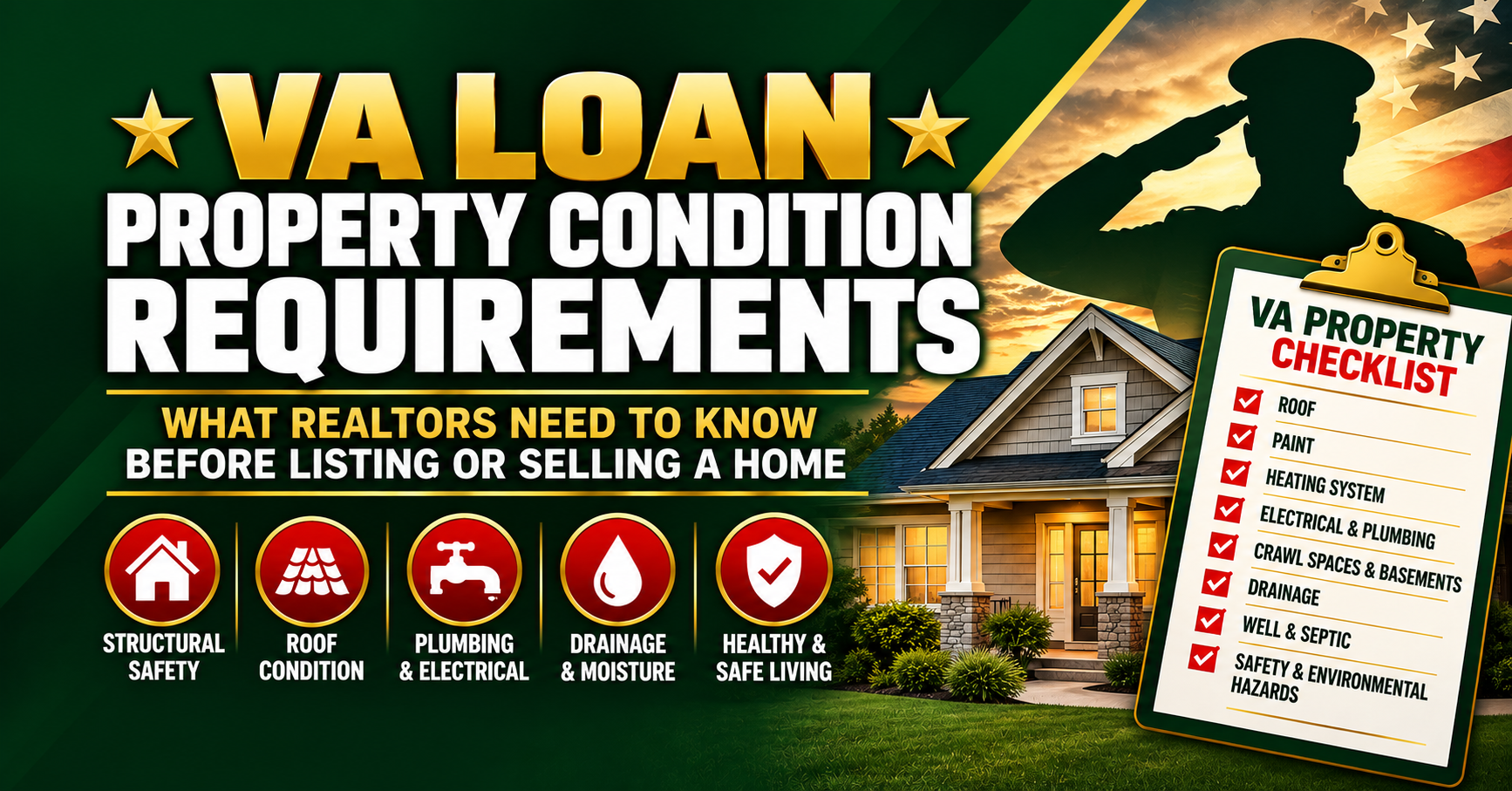
VA loans have Minimum Property Requirements (MPRs) designed to protect the health and safety of occupants and the marketability of the property.
For Realtors working with VA buyers or listing properties that may use VA financing, understanding these requirements can help identify potential appraisal problems before they delay a closing.
The following checklist covers common property conditions that VA appraisers evaluate.
Important: This is a screening checklist for reference only. It does not guarantee that a property meets all VA Minimum Property Requirements.
What to Know – VA Property Condition Checklist
Site hazards and nuisances: Airports, utility easements, underground fuel tanks, and environmental hazards can affect property eligibility.
Grading and drainage: Water must drain away from the dwelling without excessive ponding.
Individual water and sewage systems: Private wells, shared wells, and alternative water systems may require testing, agreements, or approvals.
Paint: Homes built before 1978 must not have chipped or peeling paint.
Roof: Multiple layers of shingles and defective roofing can create repair requirements.
Wood-destroying insects, fungus, and dry rot: Inspections may be required, and damaged areas must be repaired.
Private road access: Permanent easements and acceptable road maintenance arrangements are required.
Crawl spaces: Proper access, ventilation, clearance, and moisture control are important.
Basements: Excessive dampness and structural problems must be corrected.
Heating systems: Permanently installed heating must maintain at least 50°F in areas containing plumbing.
Electrical systems: Wiring and electrical systems must be safe, adequate, and operational.
Plumbing systems: Plumbing must function properly, and leaks must be repaired.
Other property requirements: Multi-unit utilities, property access, swimming pools, security bars, and state-specific requirements must be considered.
VA Property Condition Requirements Explained
1. Site Hazards and Nuisances
Airport Noise and Hazards
Properties exposed to excessive airport noise or hazards may require additional inspections and an acknowledgment from the veteran.
New construction is prohibited within an airport CLEAR zone.
High-Pressure Gas and Petroleum Lines
A dwelling cannot be located within an easement for a high-pressure gas or petroleum pipeline.
Detached improvements partially or completely within the easement cannot be assigned value.
The appraiser must comment when a residential structure is located within 100 feet of the easement.
High-Voltage Electric Lines
A dwelling cannot be located within a high-voltage electric line easement.
Detached improvements located within the easement cannot receive value.
The appraiser must comment if a residential structure is within 100 feet of the easement.
Abandoned Underground Fuel Storage Tanks
Abandoned underground fuel storage tanks must be remediated in accordance with applicable local, state, or federal requirements.
Other Environmental Hazards
The VA identifies several environmental conditions for which VA does not have a specific written policy, including:
- Radon and mold
- Sinkholes
- Asbestos
- Urea formaldehyde
- Toxic waste sites
- Radio and communication towers
- Billboards
- Earthquakes
- Methane gas
- Paint containing mercury
The VA does not have a blanket prohibition on guaranteeing loans involving these conditions.
However, certain hazardous situations can still make a property unacceptable.
For example, a property located in an area declared unsafe for human habitation by the Environmental Protection Agency may be rejected.
2. Grading and Drainage
The grading around a property must provide adequate drainage away from the dwelling.
Water should not collect or pond around the home.
Drainage conditions that allow excessive water accumulation may require correction.
3. Individual Water and Sewage Systems
Public Water and Sewer Connections
Connection to public water and sewer systems is required when mandated by the local authority.
Water Testing
Water testing is required to determine compliance with applicable local health authority standards.
Water Treatment Systems
Water treatment systems may be acceptable when the health department provides a letter confirming the requirement for the system.
The purchaser must also acknowledge the required maintenance of the treatment system.
Shared Wells
Shared wells require permanent easements providing access and maintenance rights.
A recorded well-sharing agreement is also required.
Springs and Cisterns
Springs and cisterns may be acceptable when they are customary for the area and the purchaser acknowledges the system.
Pit Privies
Pit privies are permitted where customary, provided the local health authority approves them.
4. Paint
Homes built before 1978 must not have chipped or peeling paint on the interior or exterior of the dwelling.
Paint conditions that do not meet this requirement must be addressed.
5. Roof
The VA states that up to three layers of shingles are acceptable.
However, when a defective roof has three or more layers of shingles, all shingles must be removed before repairs are completed.
6. Wood-Destroying Insects, Fungus, and Dry Rot
A wood-destroying insect inspection is required under any of the following circumstances:
- The local jurisdiction requires an inspection.
- The appraiser reports evidence of current or past infestation.
- The VA Termite Infestation Probability (TIP) map requires an inspection.
Areas damaged by wood-destroying insects, fungus, or dry rot must be repaired.
7. Private Road Access
Access through a private road must be protected by a permanent easement.
The road must have an acceptable maintenance arrangement.
8. Crawl Spaces
Crawl spaces must meet the following conditions:
- Adequate access must be provided.
- The crawl space must be vented.
- The area must be clear of debris.
- There must be adequate space for maintenance, with 18 inches recommended.
- Excessive dampness or ponding water must be corrected.
9. Basements
Basements must be free of excessive dampness and structural problems.
Any excessive moisture or structural deficiencies must be corrected.
Sump pumps must be properly hard-wired or plugged into an electrical receptacle using the manufacturer's factory electrical cord.
10. Furnace and Heating Systems
The heating system must be permanently installed.
It must be capable of maintaining a temperature of at least 50°F in areas containing plumbing.
11. Electrical Systems
The electrical system must be:
- Adequate
- Safe
- Operational
Exposed electrical wiring is not permitted.
12. Plumbing Systems
The plumbing system must be:
- Adequate
- Safe
- Operational
Plumbing leaks must be repaired.
13. Other Property Requirements
Two- to Four-Unit Properties
Properties containing two to four units may share utilities when separate shut offs are provided for each unit.
There must also be adequate, legally protected access for maintenance of all utilities serving each unit.
Access Between Units
Access to an individual unit cannot require trespassing through another unit.
Access to the rear yard also cannot require trespassing through another unit.
Space Between Buildings
There must be adequate space between buildings to allow maintenance of exterior walls.
Swimming Pools
Swimming pools must be operational and secured in accordance with local ordinances.
Bedroom Security Bars
When bedroom windows have burglar bars, at least one window must have a functioning quick-release mechanism, or the bars must be removed.
State-Specific VA Requirements
Additional VA requirements may apply depending on the property's location.
Realtors should review the applicable state-specific requirements before proceeding with a transaction.
VA state and local requirements:
https://www.benefits.va.gov/homeloans/appraiser_cv_local_req.asp
The Bottom Line – Identify VA Property Issues Early
VA Minimum Property Requirements are intended to protect the health and safety of occupants and the marketability of the property.
A home does not need to be brand-new or completely updated to qualify for VA financing.
However, certain property conditions can require repairs, inspections, documentation, or additional review before closing.
For Realtors, reviewing the property against this checklist before the appraisal can help identify potential problems early and reduce avoidable closing delays.
Have a VA buyer or a listing with possible property condition concerns?
With over 36 years of home loan experience and more than 10,000 loans closed, I can help you identify potential VA financing issues and keep your transactions moving toward closing.
Disclaimer: This article is a reference guide only and does not guarantee VA compliance. Requirements and interpretations may vary by lender, property, location, and applicable VA guidance. Consult the current VA Lenders Handbook and appropriate VA Regional Loan Center when determining property eligibility.
- #agent loan tips
- #Property condition
- #VA Loan
More Agent Loan Tips guides
Disclaimer: Informative opinion based on decades of experience, not legal advice. Guidelines change and lenders differ in their interpretation and overlays — verify details with the lender handling your loan.