
Agent Loan Tips
Temporary Rate Buydowns — A Powerful Tool to Help Sell Your Listings
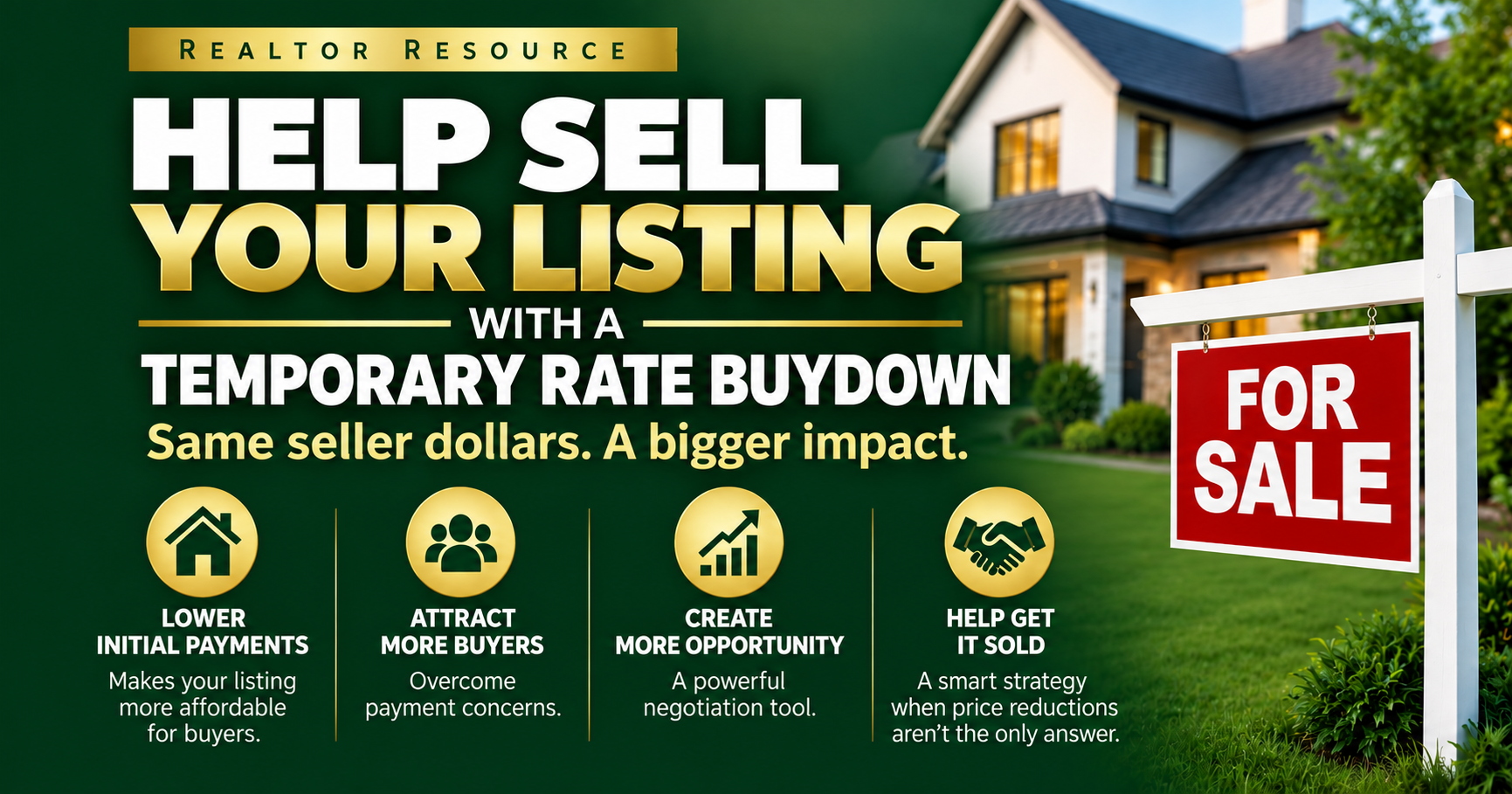
Temporary Rate Buydowns — A Powerful Tool to Help Sell Your Listings
When buyers are concerned about mortgage rates and monthly payments, a seller-funded temporary rate buydown can be a powerful tool for Realtors to help sell a listing.
Instead of automatically recommending a price reduction, consider whether using some of that money toward a temporary rate buydown could make the home more attractive to buyers due to a lower initial monthly mortgage payment.
What to know
A temporary buydown can make your listing more attractive. Seller funds can be used to temporarily reduce a buyer’s mortgage payment during the first few years of the loan.
Consider a buydown before another price reduction. A seller concession used for a temporary buydown may create a much more noticeable short-term payment benefit for a buyer than an equivalent reduction in the sales price.
Market the lower initial payment—not just the sales price. Showing qualified buyers what their initial payment could look like with a seller-funded buydown can help overcome payment shock. But disclose in compliance with the law- listing a monthly payment only is a violation of disclosure rules and can result in licensing discipline.
Use buydowns to help generate offers. Offering a seller-paid buydown upfront can give buyers another reason to consider your listing instead of competing properties.
Buydowns can be a negotiation tool. Rather than negotiating exclusively over price, Realtors can potentially negotiate seller credits that help reduce the buyer’s initial housing payment.
The reduced payment is temporary. Buyers need to understand that the mortgage payment increases as the temporary subsidy expires and eventually reaches the full payment based on the note rate.
Get the lender involved early. The cost and availability of a buydown depend on the buyer, loan amount, loan program and transaction. Have a knowledgeable mortgage broker run the actual numbers before advertising specific payment savings.
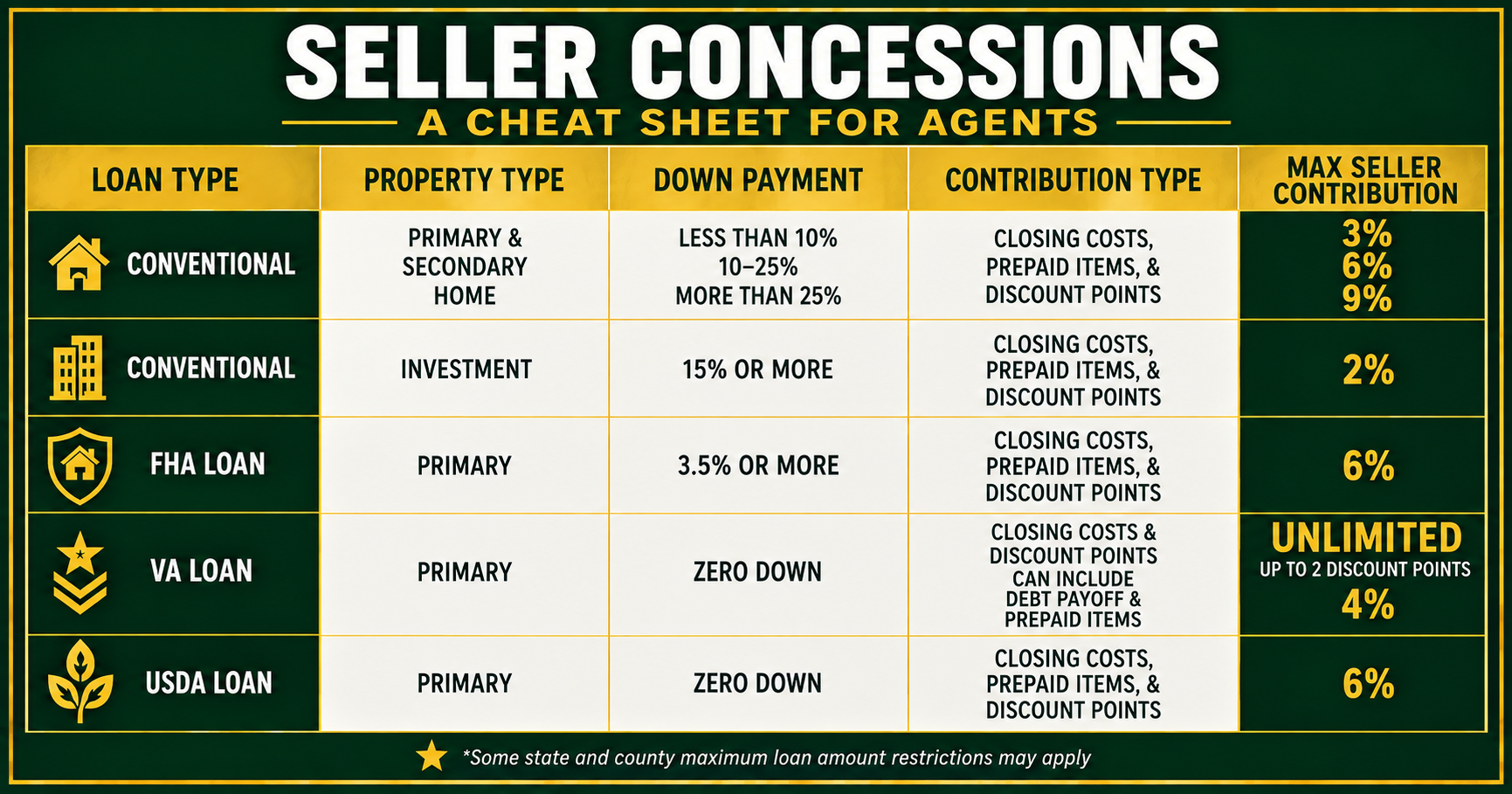
Be aware of max seller concessions based on the loan program and even amount down
Certain loan programs and property types are not eligible for temporary rate buydowns
Who can pay the temporary buydown cost?
1. Make your listing stand out with a temporary buydown
When mortgage rates are a concern, many buyers aren't necessarily rejecting the house—they're reacting to the monthly payment. A seller-funded temporary buydown can attack that problem directly.
Instead of simply marketing the home's price, Realtors can show qualified buyers how a seller contribution could temporarily reduce their mortgage payment.
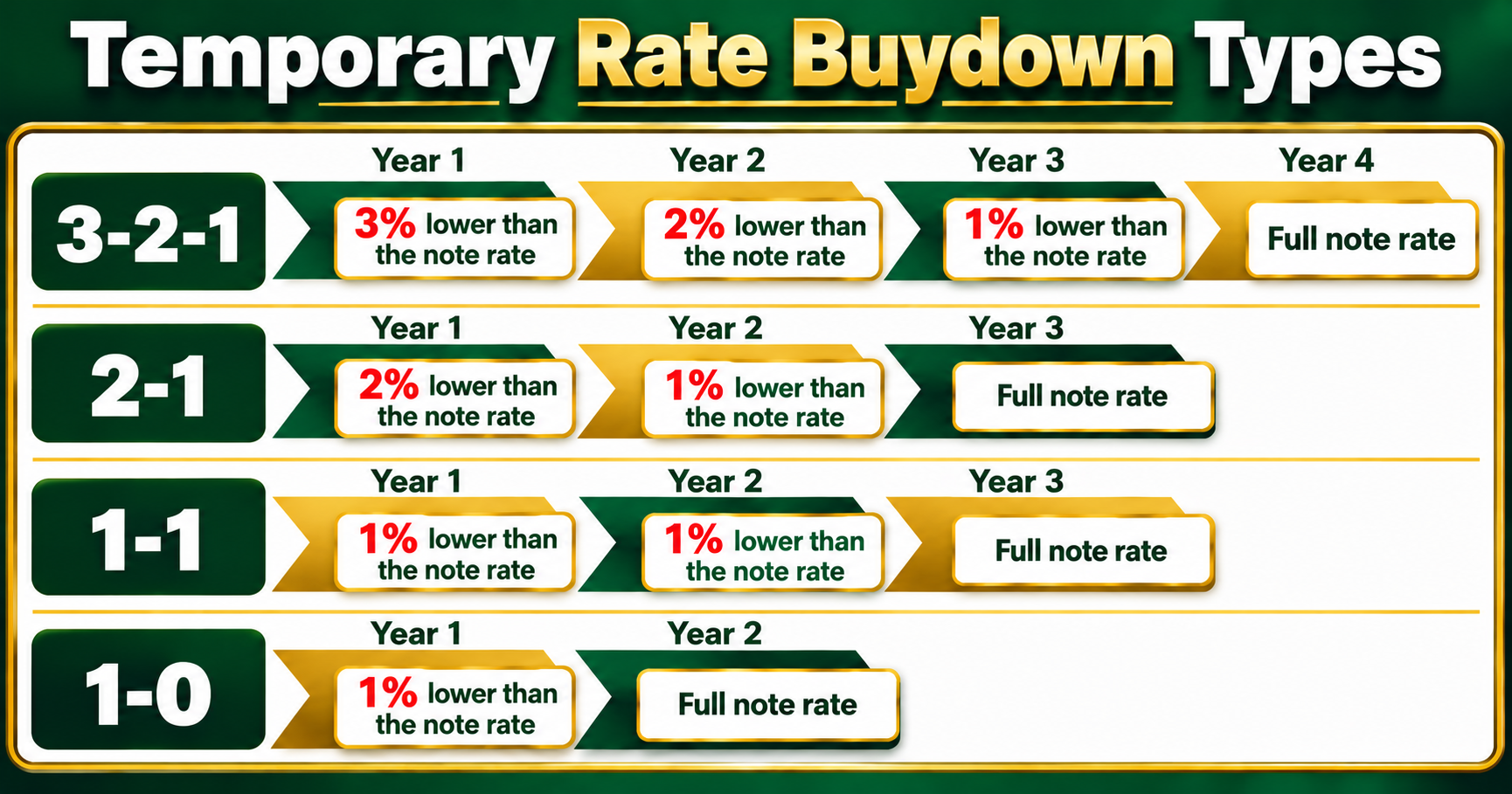
Buydown types:
2. Before reducing the price, run the buydown numbers-use my online buydown calculator to get an idea of the costs and benefits of a temporary buydown click here.
Price reductions certainly have their place, but don't automatically assume they're the best way to make a listing more affordable.
A modest reduction in sales price may produce a relatively small reduction in the buyer's monthly mortgage payment.
Using seller funds toward a temporary buydown can potentially produce a much larger payment reduction during the initial years of the loan.
Before recommending another price reduction, ask your mortgage broker to show you both scenarios.
Compare:
Price reduction → How much does the payment actually change?
Seller-funded buydown → How much could the buyer's initial payment change?
Those numbers can give you another option to discuss with your seller.
3. Market the payment—not just the price
Buyers shop for homes based partly on price, but ultimately they have to live with the monthly payment. That's why payment-focused marketing can be powerful.
For example, rather than simply advertising:
“Seller offering a $10,000 credit.”
Consider showing buyers what that credit could potentially accomplish through a temporary rate buydown.
The specific numbers should always be prepared by the lender and include appropriate assumptions to comply with disclosure rules. Listing a payment only is not compliant.
This turns an abstract seller credit into something buyers can more easily understand:
A potentially lower initial monthly housing payment.
4. Use a buydown to help generate offers
A temporary buydown can also be positioned as an incentive when launching or remarketing a listing.
Instead of waiting for a buyer to request a concession, the seller can potentially advertise that funds are available toward an eligible temporary rate buydown.
That can create another reason for payment-conscious buyers to consider the property.
The key is coordinating with a mortgage professional before marketing the incentive so the numbers and loan scenarios are accurate.
5. Turn seller concessions into a negotiating tool
Negotiations don't always have to revolve around reducing the sales price.
Suppose a buyer likes the property but feels the payment is too high.
Instead of immediately negotiating thousands of dollars off the price, another option may be negotiating a seller credit toward a temporary buydown.
That can potentially address the buyer's immediate concern—the monthly payment—while giving the seller another way to structure the transaction.
Every transaction is different, so compare the alternatives before deciding how to structure the offer.
6. Make sure buyers understand that the payment increases
Temporary means temporary.
With a 2-1 buydown, for example, the buyer's payment is temporarily subsidized during the first two years before reaching the full payment based on the note rate.
With a 3-2-1 buydown, the subsidy lasts three years.
The buyer needs to understand and be comfortable with the full mortgage payment after the buydown period ends.
A temporary buydown should never be represented as a permanently reduced mortgage rate. Nor should a future refinance be presented as an absolute solution to permanently lower the rate and monthly payment prior to or when the buydown ends.
7. Get your mortgage broker involved before you market it
Don't guess at buydown numbers. Click here for my buydown calculator to get a rough idea of a buydown cost.
Keep in mind the cost of a temporary buydown can vary depending on the sales price, loan amount, interest rate, loan program and structure of the transaction. Seller-contribution limits and other program requirements can also apply.
Before advertising a specific payment or seller-funded incentive, have an experienced mortgage broker calculate the numbers.
That gives you accurate information you can use when discussing options with your seller and prospective buyers.
8. Be aware of max seller concessions based on the loan program and even amount down. For example--a 3/2/1 buydown cost may result in a larger seller credit than is allowed on a less than 10% down payment conventional loan. See this chart below:
9. Certain loan programs and property types are not eligible for temporary rate buydowns
- USDA loans are ineligible with most lenders
- Investment property is ineligible, second home eligible on conventional
- Jumbo loan may be eligible
- Manufactured home only eligible on conventional loan type
- Most loans with ARM features are ineligible
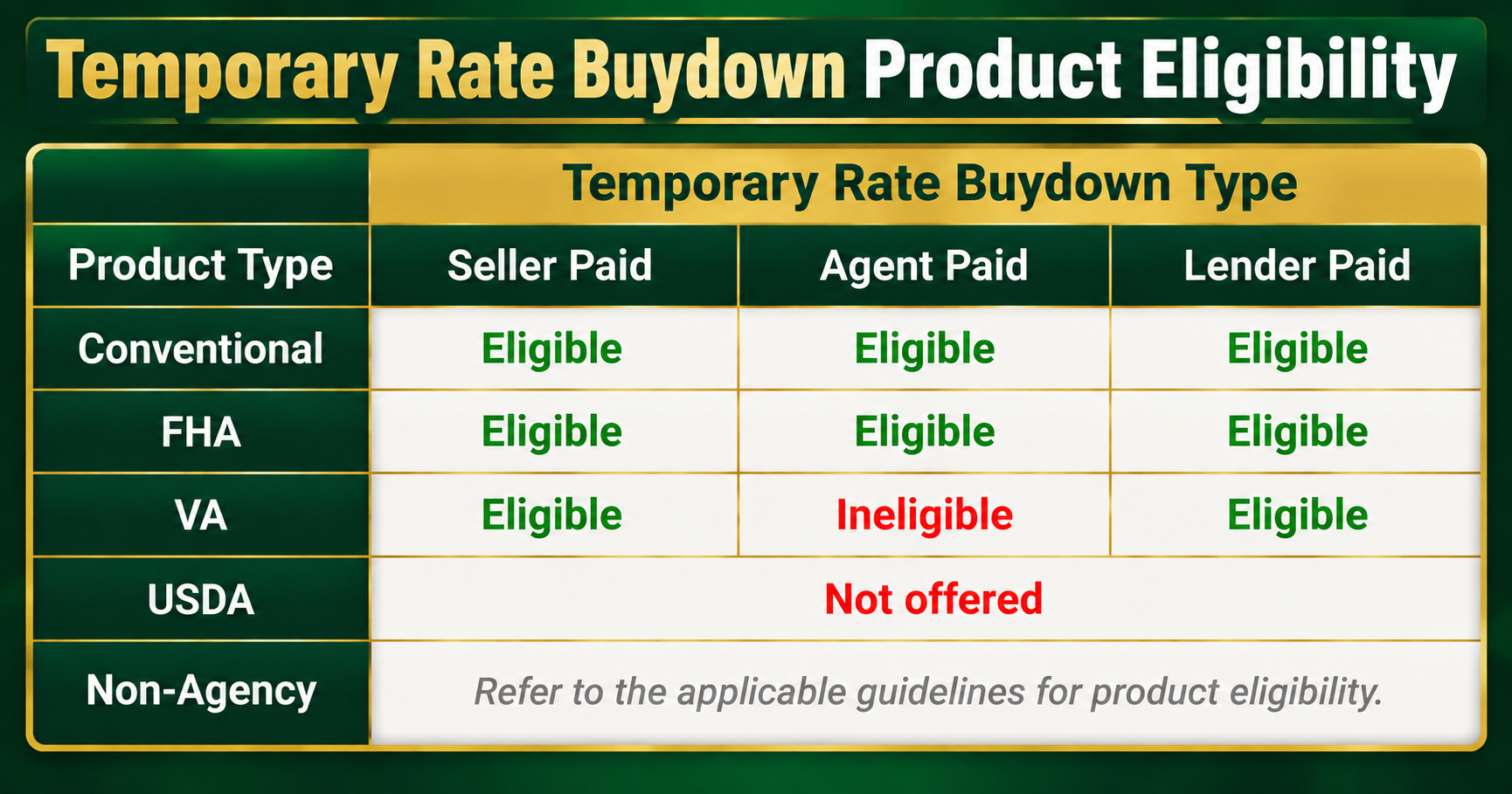
Seller and Agent Paid Buydowns
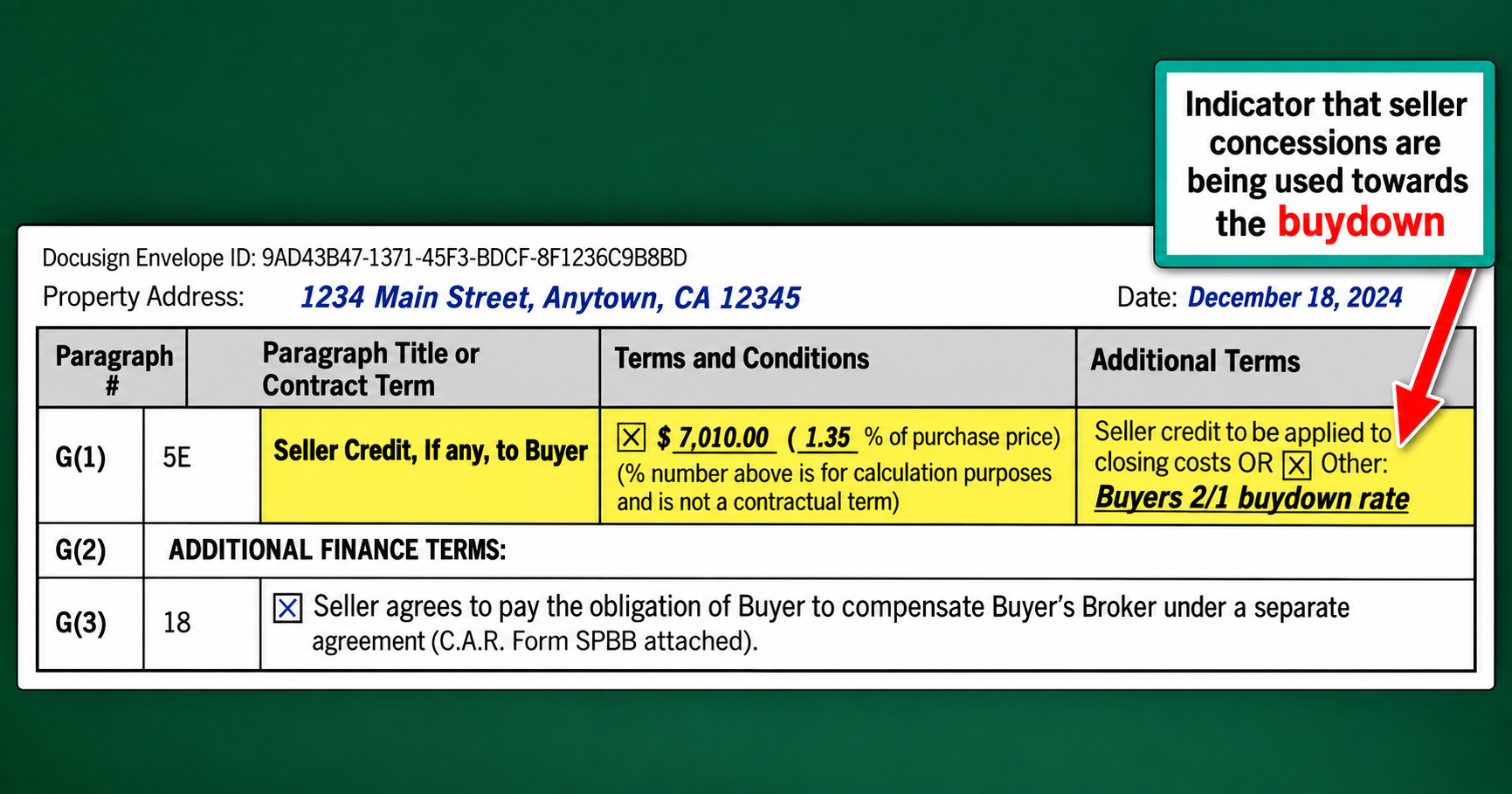
Seller and agent paid temporary rate buydowns must be documented through one of the following:
- A purchase agreement or addendum indicating that the seller/agent approves of the use of the seller concessions/agent credits being allocated towards the buydown, OR
- (Agent paid only) A signed and dated statement from the agent approving the use of agent credits towards the buydown and the amount of agent credits being allocated towards the buydown
- A buydown agreement typically will also be signed by the parties at or prior to closing signed and dated by the seller/agent contributing to the buydown prior to closing. This agreement is typically provided with the buyer's loan doc package from the lender
A sales contract example below:
Before you reduce the listing price—run the numbers
When a listing isn't moving, reducing the price isn't your only potential option.
Ask: Could a seller-funded temporary buydown make the property more attractive to payment-conscious buyers?
Could the same seller dollars create a bigger short-term payment impact as a buydown than as a price reduction?
Could we market the financing incentive to generate additional interest?
A temporary buydown won't be right for every buyer or every listing. But when the numbers work, it can give Realtors and sellers another valuable tool to help market the property, negotiate an offer and get the home sold.
Before your seller makes another price reduction, have me run the buydown numbers.
I can show you what different seller-credit amounts could potentially do for a buyer's initial mortgage payment—giving you another strategy to help move the listing.
- #agent loan tips
- #First time home buyer
- #rate buydown
- #payment stategy
More Agent Loan Tips guides
Disclaimer: Informative opinion based on decades of experience, not legal advice. Guidelines change and lenders differ in their interpretation and overlays — verify details with the lender handling your loan.