
Property Condition & Appraisal
VA appraisal tips
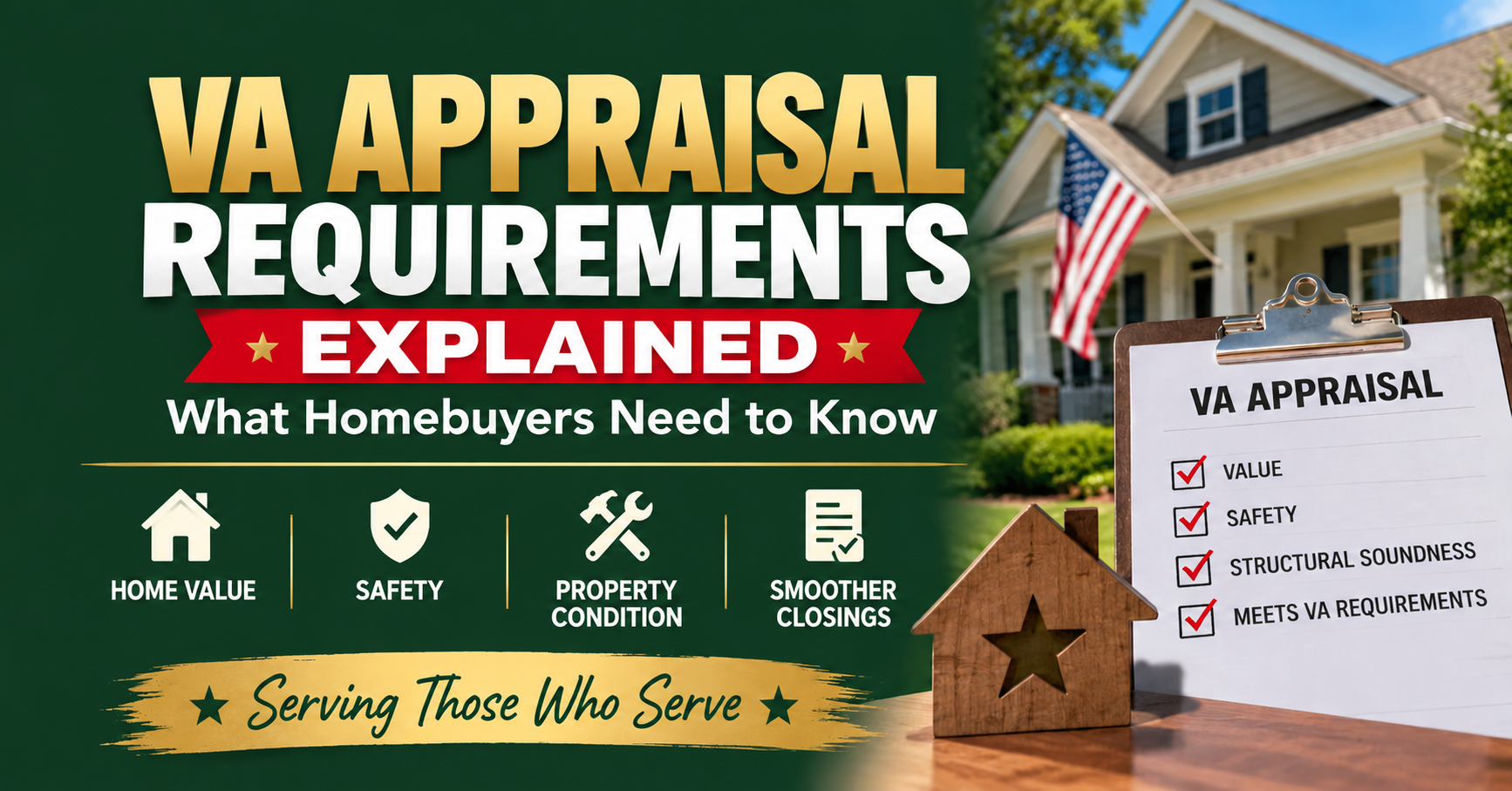
VA Appraisal Tips — What Homebuyers Need to Know
If you’re buying a home with a VA loan, the VA appraisal is an important step in the process. It establishes the home's value and checks whether the property meets basic VA standards for safety, soundness and sanitation.
The good news: Most homes in reasonable condition can get through a VA appraisal without major problems. Understanding what the appraiser is looking for can help you avoid surprises and unnecessary closing delays.
What to Know
- A VA appraisal is NOT a home inspection.
- The appraisal determines the home's market value.
- The property must meet VA Minimum Property Requirements (MPRs).
- Health, safety and structural problems may require repairs.
- Older homes aren't automatically a problem.
- A low appraisal doesn't necessarily kill the transaction.
- VA-required repairs don't necessarily kill the deal either.
- The Notice of Value (NOV) establishes the VA appraisal value and conditions.
- Appraisal timing can affect your closing date.
- An experienced VA loan team can help prevent delays.
1. A VA Appraisal Is NOT a Home Inspection
This is probably the most important point to understand.
A VA appraisal focuses primarily on value and basic VA property requirements. A home inspection is a much more detailed examination of the home's physical condition, including the roof, foundation, plumbing, electrical system, HVAC, appliances, drainage and other components.
Even when a separate home inspection isn't required for the VA loan, having one can still be a very good idea.
2. The Appraisal Determines the Home's Market Value
The VA-approved appraiser develops an opinion of the property's market value.
The appraiser considers factors such as:
- Location
- Living area and lot size
- Age and condition
- Bedrooms and bathrooms
- Design and improvements
- Garage and other features
- Recent sales of comparable properties
The appraised value becomes particularly important when it comes in below your agreed-upon purchase price.
3. The Property Must Meet VA Minimum Property Requirements
VA financing generally requires the property to be safe, structurally sound and sanitary.
These standards are commonly referred to as VA Minimum Property Requirements, or MPRs.
The appraiser may look for issues involving adequate living space, functional electrical and plumbing systems, permanent heating, water and sewage disposal, roof condition, property access, crawl spaces and other basic property conditions.
Private wells, septic systems, private roads and certain other property features can require additional documentation or review.
4. Health, Safety and Structural Problems May Require Repairs
Obvious property defects can become VA appraisal issues.
Examples include:
- Exposed or unsafe electrical wiring
- Unsafe stairs or missing railings
- Significant structural problems
- Active roof leaks
- Excessive moisture
- Serious deterioration or decay
- Certain pest or wood-destroying organism issues
- Defective paint on pre-1978 homes
When repairs are required, they generally need to be completed and documented—and sometimes reinspected—before closing.
5. Older Homes Aren't Automatically a Problem
Age and condition are not the same thing.
A well-maintained 70-year-old home could have fewer VA appraisal problems than a poorly maintained 15-year-old property.
The primary concern is whether the property meets applicable VA and lender requirements—not simply how old it is.
6. A Low Appraisal Doesn't Necessarily Kill the Transaction
Suppose you agree to buy a home for $500,000 and the VA appraisal supports a value of $485,000.
That doesn't automatically mean the transaction is over.
Possible solutions may include:
- Asking the seller to reduce the price
- Requesting a Reconsideration of Value (ROV) with supporting information
- Paying some or all of the difference in cash
- Negotiating a compromise with the seller
- Use the mandatory appraisal contingency clause required in all sales contracts with VA financing to cancel and receive a deposit refund-- if an agreement can't be reached
Before paying substantially more than the appraised value, carefully consider whether doing so makes financial sense.
7. VA-Required Repairs Don't Necessarily Kill the Deal Either
A required repair can sound alarming, but many VA appraisal issues are relatively straightforward to correct.
The key is determining quickly:
What needs to be repaired? Who will complete it? Who will pay for it? Is a reinspection required? Can it be completed before closing?
Often, the seller agrees to complete the required repairs. Depending on the circumstances and lender requirements, other solutions may sometimes be available.
8. The Notice of Value Establishes the VA Value and Conditions
The Notice of Value (NOV) establishes the property's final appraised value for VA loan purposes.
It may also identify conditions that must be satisfied before closing, such as:
- Property repairs
- Pest inspections
- Water-related requirements
- Property eligibility documentation
- Condo approval
- Other property-specific requirements
Don't just focus on the appraised dollar amount—the conditions listed with the appraisal can be equally important.
9. Appraisal Timing Can Affect Your Closing Date
VA appraisal turnaround times vary depending on the property, location, appraiser availability and complexity of the assignment.
Unique properties, rural homes and homes with limited comparable sales can sometimes take additional time.
Required repairs, reinspections or requests for additional documentation can also extend the process.
My advice: Once you're under contract and ready to proceed, get the VA appraisal ordered promptly.
10. An Experienced VA Loan Team Can Help Prevent Delays
VA appraisals have a reputation for being difficult, but that reputation is often exaggerated.
Most homes in reasonably good condition can make it through the process without major issues.
Where experience becomes valuable is identifying potential problems before they become closing problems.
A loan officer and real estate agent who understand VA financing can help recognize potential appraisal issues, address required repairs quickly and keep everyone focused on getting the transaction closed.
The Bottom Line
A VA appraisal has two primary purposes:
Establish the home's market value and confirm that the property meets applicable VA property standards.
Remember, the VA appraisal isn't intended to replace a professional home inspection, and a low appraisal or required repair doesn't automatically mean the transaction is dead.
In many cases, there are solutions.
The earlier potential issues are identified and addressed, the easier it is to keep your VA home purchase moving toward closing.
Have Questions About a VA Home Loan?
VA loans offer tremendous benefits for eligible Veterans, active-duty service members and qualifying surviving spouses, but the guidelines can sometimes be confusing.
I'll explain the loan numbers, appraisal requirements and potential issues in plain English so you know what to expect—without sales pressure or surprises.
The goal is simple: make your VA home loan easier to understand and help you get to closing with as little hassle as possible.
Informative opinion based on decades of lending experience, not legal advice. VA guidelines and individual lender requirements can change, so verify current requirements with the lender handling your loan.
- #VA loan
- #Property condition
- #appraisal
More Property Condition & Appraisal guides
Disclaimer: Informative opinion based on decades of experience, not legal advice. Guidelines change and lenders differ in their interpretation and overlays — verify details with the lender handling your loan.