Property Condition & Appraisal
VA Property Condition Requirements
VA Property Condition Requirements — What to Know
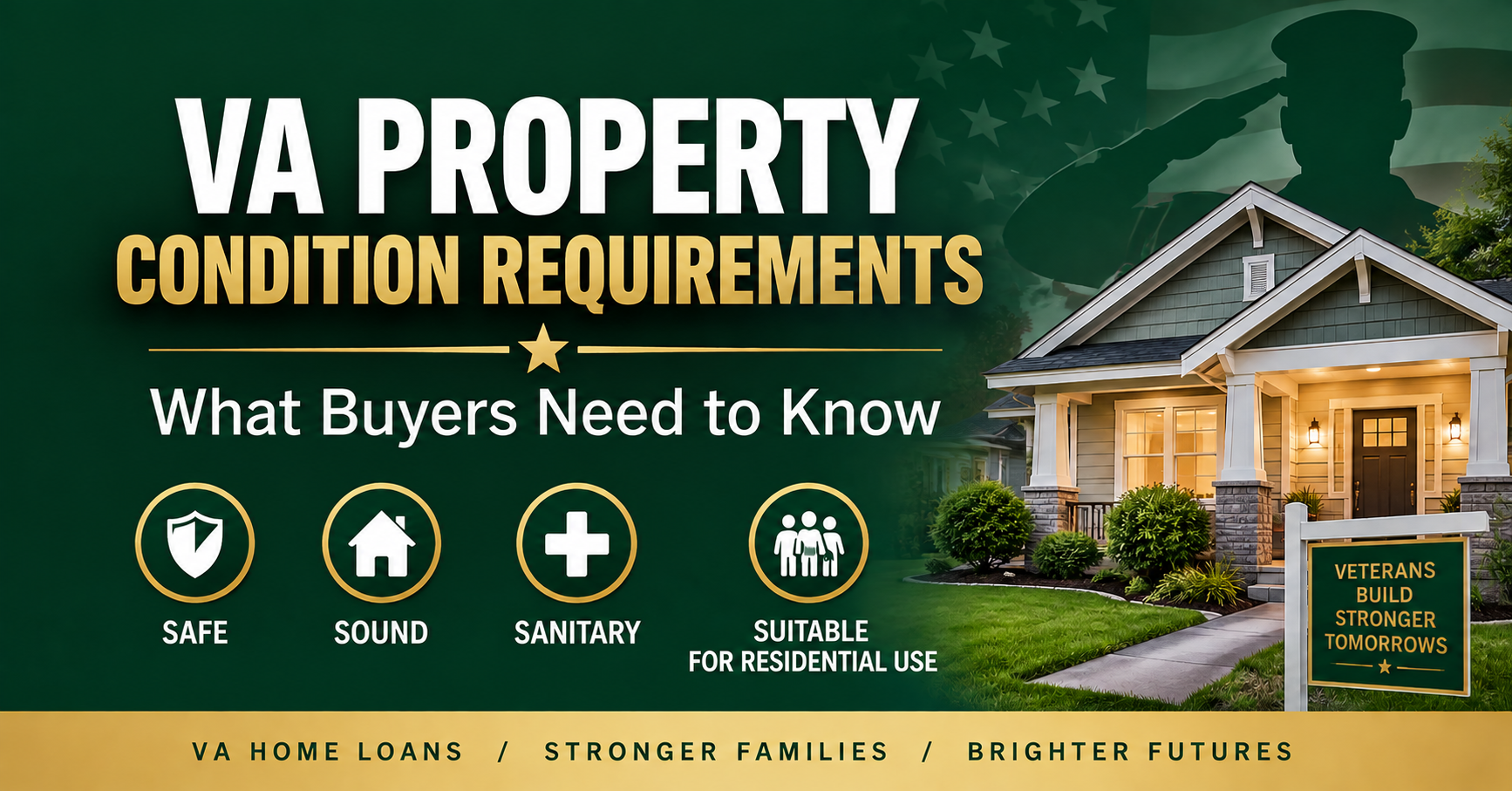
VA loans have Minimum Property Requirements (MPRs) designed primarily to make sure a home is safe, structurally sound, sanitary, and suitable for occupancy. A VA appraiser will typically identify visible property conditions that need to be corrected before the loan can close.
What to know
- The home must be safe, sound, and structurally acceptable.
- Site hazards, drainage problems, and certain utility or easement issues can cause problems.
- Water, well, septic, and sewage systems must meet applicable requirements.
- Peeling or chipped paint can require repair, particularly on homes built before 1978.
- The roof must have adequate remaining useful life and protect the home from the elements.
- Termite, wood-destroying insect, and dry-rot issues may require inspection and repair.
- Private roads must provide acceptable access and typically need proper maintenance arrangements.
- Crawl spaces, attics, and basements must be accessible and free of significant moisture and deterioration.
- Heating, electrical, and plumbing systems must be safe and operational.
- Other safety problems such as broken windows, major trip hazards, unsafe stairs, or defective pools may require correction.
- VA requirements can vary by location, and individual lenders may have additional requirements.
1. The Home Must Be Safe, Sound, and Structurally Acceptable
The basic idea behind VA Minimum Property Requirements is straightforward: the property should provide a safe and sanitary living environment and should not have significant structural defects.
The appraiser will look for visible conditions that could affect the safety of the occupants, security of the property, or structural soundness of the home.
2. Site Hazards and Drainage Can Be an Issue
Certain environmental or site conditions may require additional investigation or corrective action. These can include excessive noise, proximity to certain pipelines or high-voltage transmission lines, abandoned underground fuel tanks, and other potentially hazardous conditions.
The property should also have adequate grading and drainage. Water should drain away from the structures, standing water should not be present, and erosion problems may need to be corrected.
3. Water, Well, Septic, and Sewage Systems
The property needs an acceptable source of safe water and an adequate sewage-disposal system.
When public water or sewer is reasonably available, connection may be required. Properties with private wells or septic systems may require testing or additional documentation to establish that the systems meet applicable health and safety standards.
Shared wells generally require appropriate access, maintenance arrangements, and a recorded well-sharing agreement.
4. Peeling and Chipped Paint
Exterior wood surfaces should be adequately protected from the weather.
Peeling, chipped, or defective paint can require correction. This is especially important for homes built before 1978 because deteriorated paint may present a lead-based paint concern.
5. Roof Condition
The roof should be in serviceable condition and have adequate remaining useful life.
A roof that is leaking, seriously deteriorated, or approaching the point where immediate replacement is necessary can result in a repair requirement before the VA loan closes.
The number and condition of existing roofing layers can also affect whether repairs or complete removal and replacement are necessary.
6. Termites, Wood-Destroying Insects, and Dry Rot
A wood-destroying pest inspection may be required depending on the property's location, local requirements, or evidence observed by the appraiser.
If an inspection identifies active infestation, damage, or dry rot, corrective work may be required.
California properties are subject to VA-specific pest inspection requirements, so buyers and sellers should address potential wood-destroying pest issues early in the transaction.
7. Private Road Access
Homes located on private roads must have acceptable legal and physical access.
A permanent recorded easement may be required, along with an acceptable road-maintenance arrangement such as an HOA-maintained road or joint maintenance agreement.
The road should also provide an adequate all-weather surface.
8. Crawl Spaces, Attics, and Basements
These areas should have reasonable access and adequate ventilation.
Significant standing water, excessive dampness, mold, mildew, dry rot, pest damage, or other conditions affecting the home's safety or structural integrity may need to be corrected.
The areas should also provide sufficient access for normal inspection and maintenance.
9. Heating, Electrical, and Plumbing Systems
The home needs an adequate and safe source of heat. Certain unconventional heating systems may require additional inspection or documentation.
Electrical systems should be safe and operational. Exposed wiring, defective outlets, and other obvious electrical hazards can require repair.
Plumbing must also be functional and free from significant leaks. The home should have a reliable supply of sanitary water, including hot water.
10. Other Safety and Property Condition Problems
The VA appraiser may identify other visible safety or property-condition concerns.
Examples can include broken or cracked windows, severe trip hazards, unsafe stairs or missing handrails, defective swimming pools, drainage problems around the foundation, or inadequate access around or between buildings.
For multi-unit properties, each unit should have appropriate access, and shared utilities may need separate shutoffs.
11. Requirements Can Vary
VA Minimum Property Requirements establish the basic standards, but additional requirements can apply depending on the property's location and condition.
Individual lenders may also impose requirements known as lender overlays that are more restrictive than the VA's basic guidelines.
For that reason, a property that appears to meet the general VA requirements may still require additional inspections, documentation, or repairs.
Bottom line
VA property requirements are primarily about making sure the home is safe, sanitary, structurally sound, and suitable for the veteran to occupy.
A home does not have to be perfect or completely updated to qualify for VA financing. However, significant health, safety, structural, or property-condition problems may have to be corrected before closing.
If you're considering a VA loan and aren't sure whether a property's condition will qualify, it's smart to identify potential issues early and review them with your loan officer before getting too far into the transaction.
- #Property condition
- #VA loan
More Property Condition & Appraisal guides
Disclaimer: Informative opinion based on decades of experience, not legal advice. Guidelines change and lenders differ in their interpretation and overlays — verify details with the lender handling your loan.