
First Time Buyer
What Documents Are Needed For a Mortgage
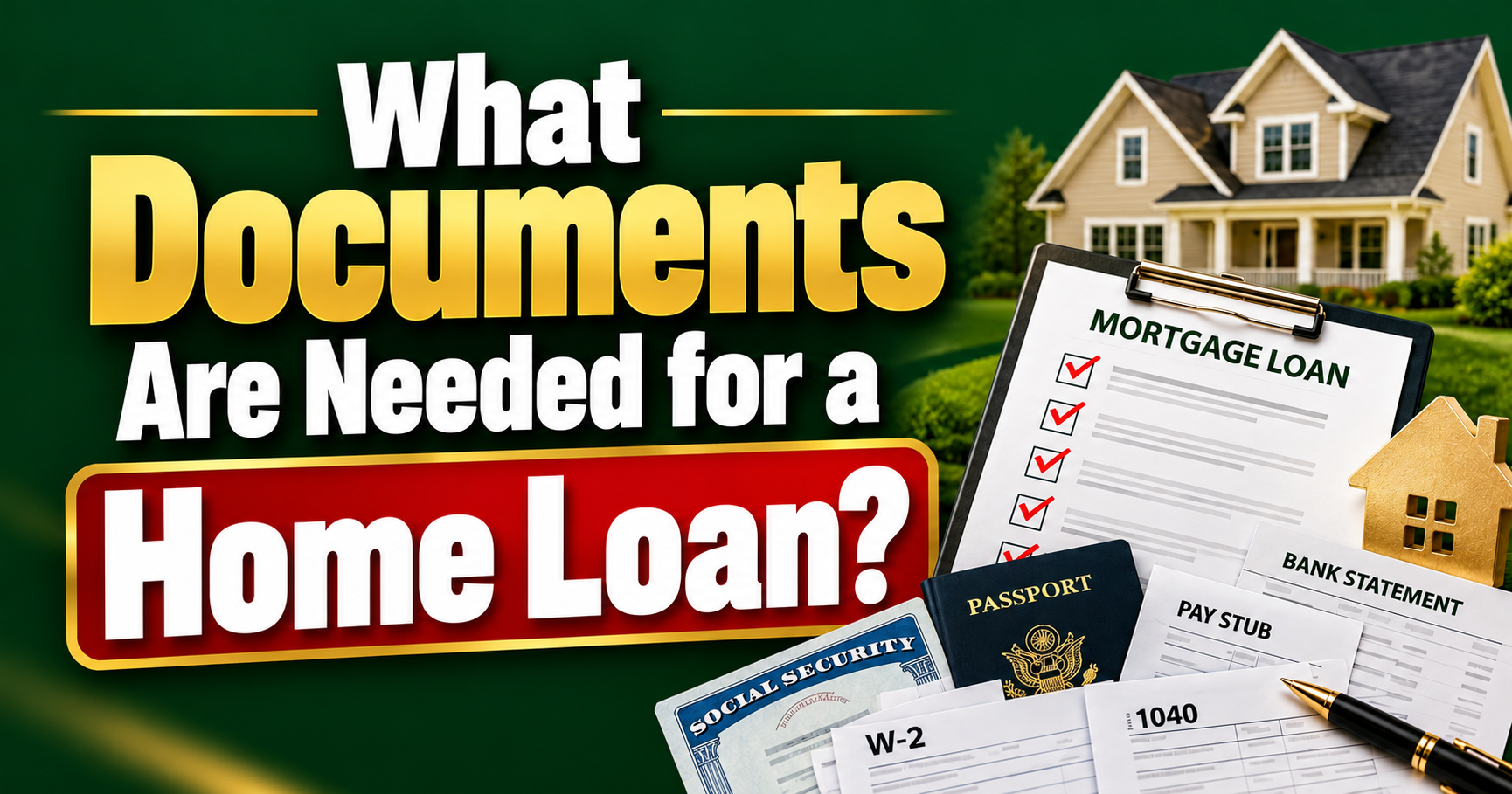
What Documents Are Needed for a Home Loan?
What We Request: Please know that we strive to only ask for the documentation required to approve your loan. There are times when you send us something which creates additional requests. If you have questions or concerns at any time, please do not hesitate to contact us!
How To Get Your Loan Closed Faster: A lot is going on behind the scenes to get your loan approved and meet the deadlines set by your sales contract. To ensure that these deadlines are met, we need your cooperation. Below are the typica; documents needed by loan type.
The paperwork required depends on your loan program, how you earn your income, and your financial situation. Conventional, FHA, VA, and USDA loans share many of the same requirements, but there are some important differences.
What to know
Get pre-approved before shopping for a home. A properly documented pre-approval makes your offer stronger and helps avoid surprises.
Most home loans require the same basic documents. Pay stubs, W-2s, bank statements, and identification are common starting points.
Conventional loans have standard documentation requirements. Additional paperwork depends on your income, assets, and credit history.
FHA loans have similar documentation requirements. Gift funds, employment history, and certain credit issues may require additional verification.
VA loans require proof of military eligibility. A Certificate of Eligibility (COE) is generally needed.
USDA loans require household income verification. Income from other adult household members may need to be documented, even if they aren't borrowers.
Self-employed borrowers usually need additional financial records. Personal and business tax returns, profit-and-loss statements, and other business documents may be necessary.
Investment property loans require additional paperwork. Rental income, existing mortgages, leases, and property expenses may need verification.
Special loan programs can have additional requirements. Down payment assistance and profession-based programs may require extra documentation.
Understanding why lenders request documents makes the process easier. Each document helps verify your income, assets, debts, or eligibility.
Getting your paperwork together early can speed up closing. Missing or incomplete documents are common causes of delays.
1. Get Pre-Approved Before Shopping for a Home
There's a big difference between getting pre-qualified and getting properly pre-approved.
A pre-qualification is often based on information you provide without much verification. A stronger pre-approval includes a review of your income, assets, credit, and other qualifying factors.
When you find the right home, having a solid pre-approval can give the seller more confidence in your ability to close.
It also helps identify potential problems before you're under contract.
Keep in mind that pre-approval isn't a final loan approval. The property, appraisal, title, updated financial information, and underwriting conditions still need to be satisfied.
2. Basic Documents Needed for Most Home Loans
Most conventional, FHA, VA, and USDA home loans start with similar documentation.
Identification
- Valid driver's license, passport, or acceptable government-issued identification
- Social Security number or other applicable taxpayer identification information
Employment and income
- Most recent 30 days of pay stubs
- Last two years of W-2 forms, when applicable
- Federal income tax returns when required
- Documentation of Social Security, retirement, disability, or other qualifying income
- Employment history for the previous two years
Bank accounts and assets-all numbered pages are needed
- Most recent two months of bank statements -- when required
- Retirement and investment account statements if those funds are being used
- Documentation of down payment (EMD) and closing cost funds
- Gift letter and supporting documentation if gift funds are being used
Other documentation when applicable
- Mortgage statements for other properties owned
- Property tax and homeowners insurance information
- Divorce decrees or support agreements when relevant
- Bankruptcy or foreclosure documentation
- Letters explaining credit issues, employment gaps, or unusual deposits
Not everyone needs every document on this list. Automated verification systems can sometimes eliminate the need for certain statements, tax returns, or pay stubs.
3. Documents Needed for Conventional Loans
Conventional loans are popular because they offer flexible financing options, competitive rates, and down payments as low as 3% for eligible borrowers.
For most salaried or hourly employees, the documentation is relatively straightforward.
Typical requirements include:
- Recent pay stubs
- W-2 forms
- Bank statements or verified assets
- Employment verification
- Identification
- Additional income documentation when applicable
Self-employed borrowers, rental property owners, and borrowers with more complicated finances may need additional records.
One advantage of conventional financing is that automated underwriting can sometimes reduce the amount of paperwork required.
4. Documents Needed for FHA Loans
FHA loans are especially popular with first-time buyers and borrowers who need more flexible credit or down payment requirements.
Eligible borrowers can purchase a home with as little as 3.5% down.
FHA loans generally require the same basic documentation as conventional loans, including:
- Recent pay stubs and W-2s
- Bank statements
- Employment verification
- Tax returns when required
- Identification
- Gift fund documentation when applicable
FHA underwriting may require additional explanations or supporting documentation for certain credit, employment, or income situations.
The property must also meet FHA requirements. Condominiums have additional eligibility rules, although some individual units may qualify without full project approval.
5. Documents Needed for VA Loans
VA loans offer tremendous benefits to eligible veterans, active-duty service members, and certain surviving spouses.
One of the biggest advantages is the ability to purchase a home with no down payment for qualified borrowers.
Along with the standard income and asset documents, VA loans require verification of military eligibility.
Additional VA documents may include:
- Certificate of Eligibility (COE)
- DD-214 for eligible veterans
- Statement of service for active-duty military members
- Documentation supporting eligibility for qualifying surviving spouses
- Additional records related to military income or benefits, when applicable
The good news is that I can often obtain the Certificate of Eligibility electronically, making this part of the process easier.
VA loans also have specific income, residual income, and property requirements that must be satisfied.
6. Documents Needed for USDA Loans
USDA loans offer eligible homebuyers the opportunity to purchase a home with no down payment in qualifying rural and suburban areas.
USDA loans have two important eligibility considerations:
- The property must be in a USDA-eligible location.
- Household income must fall within the applicable program limits.
The standard income, employment, and asset documentation is similar to other home loans.
Additional USDA documentation may include:
- Income verification for adult household members, including non-borrowers
- Documentation of household size
- Childcare expense verification when applicable
- Student status documentation for certain household members
- Additional income or asset explanations
USDA household income calculations are different from the income calculations used to determine how much mortgage payment you can qualify for.
Some USDA documentation requirements also differ between the Guaranteed and Direct loan programs.
7. Documents Needed for Self-Employed Borrowers
If you're self-employed, own a business, or receive significant 1099 income, expect to provide more paperwork than a typical W-2 employee.
That's because lenders need to determine how much qualifying income your business actually generates.
Common documentation includes:
- Last two years of personal federal income tax returns to include all schedules
- Business federal income tax returns when required---typically if you own 25% or more of the business these will be required
- Schedule C, K-1s, or other applicable tax schedules
- Current year-to-date profit-and-loss statement
- Business bank statements when needed
- Business license or verification of business existence
- Additional financial statements when required
One important point: Your gross business revenue isn't necessarily your qualifying income.
Lenders analyze your net income, with certain allowable adjustments, to determine how much income can be used for loan qualifying.
Depending on the loan program, qualifying self-employed borrowers may be eligible for a shorter income history or alternative documentation.
8. Documents Needed for Investment Property Loans
Buying a rental property usually requires additional documentation, especially when you're using rental income to qualify.
Along with the standard mortgage paperwork, lenders may request:
- Current mortgage statements for other properties
- Property tax and insurance information
- Existing rental agreements or leases
- Federal tax returns showing rental income
- Documentation of rental income for the property being purchased
- Homeowners association dues, when applicable
- Verification of required cash reserves
If you're buying a property that already has tenants, existing leases may be helpful.
An appraisal with a rental income analysis may also be needed.
Investment property loans generally have different down payment, reserve, and qualification requirements than loans for primary residences.
9. Documents Needed for Special Home Loan Programs
Certain homebuyer assistance programs and special financing options have additional requirements.
These can include down payment assistance programs, first-time buyer programs, and financing assistance/special loan programs for qualifying medical and first responder professions.
Depending on the program, you may need:
- Proof of employment or professional eligibility
- Homebuyer education certificates
- Income documentation for all applicable household members
- Proof of first-time homebuyer status
- Additional program applications or disclosures
In California, assistance programs may have their own income limits, purchase price restrictions, and eligibility rules.
It's important to review these requirements with your loan professional before making an offer.
10. Why Mortgage Lenders Need All These Documents
It can seem like lenders ask for a lot of paperwork, but there's a reason for each request.
- Pay stubs and W-2s These help verify your current income and employment history.
- Tax returns These may be needed to analyze self-employment, rental income, business losses, or other income that isn't fully reflected on your pay stubs.
- Bank statements These verify available funds for your down payment, closing costs, and required reserves. They may also help identify large deposits that need explanation.
- Credit reports Your credit report helps determine your existing monthly debt obligations, credit history, and eligibility for different loan programs.
- Rental history Verification of rent payments may be required in certain situations, particularly when needed to support a borrower's credit history.
- Gift letters When someone gives you money toward your home purchase, lenders may need to verify the source of those funds and confirm that repayment isn't expected.
- Letters of explanation These are sometimes requested to clarify employment gaps, credit problems, unusual deposits, or other circumstances that need additional review.
11. How to Make the Home Loan Process Faster and Easier
After more than 36 years in the mortgage business and over 10,000 loans closed, I can tell you that being prepared makes a big difference.
Here are some simple ways to avoid unnecessary delays:
- Gather your financial documents before applying.
- Provide complete bank statements, including all pages.
- Make sure your pay stubs and other records are current.
- Avoid moving large amounts of money between accounts without discussing it with your loan officer.
- Don't open new credit accounts or finance large purchases during the loan process.
- Respond promptly when additional documentation is requested.
- Let your loan officer know about changes in employment, income, or finances.
And one more important tip: Don't assume you won't qualify because your financial situation is complicated.
An experienced mortgage broker can often identify loan options that borrowers didn't know were available.
At Lend4less.com, my goal is simple: Make your home loan easier, close it faster, and save you money in the process.
With 36+ years of experience, over 10,000 loans closed, and access to multiple wholesale lenders, I can help you find the right loan program at a competitive price.
Conventional • FHA • VA • USDA • Jumbo • Refinance
Rock Bottom Rates!
Documentation requirements vary by loan program, lender, underwriting findings, and individual borrower circumstances. Not every document listed above will be required for every loan.
- #First time home buyer
- #FHA loan
- #VA loan
- #USDA loan
- #Conventional Loan
More First Time Buyer guides
Disclaimer: Informative opinion based on decades of experience, not legal advice. Guidelines change and lenders differ in their interpretation and overlays — verify details with the lender handling your loan.