Loan Program tips
Conventional, FHA, VA, USDA Loans — How Do They Compare?
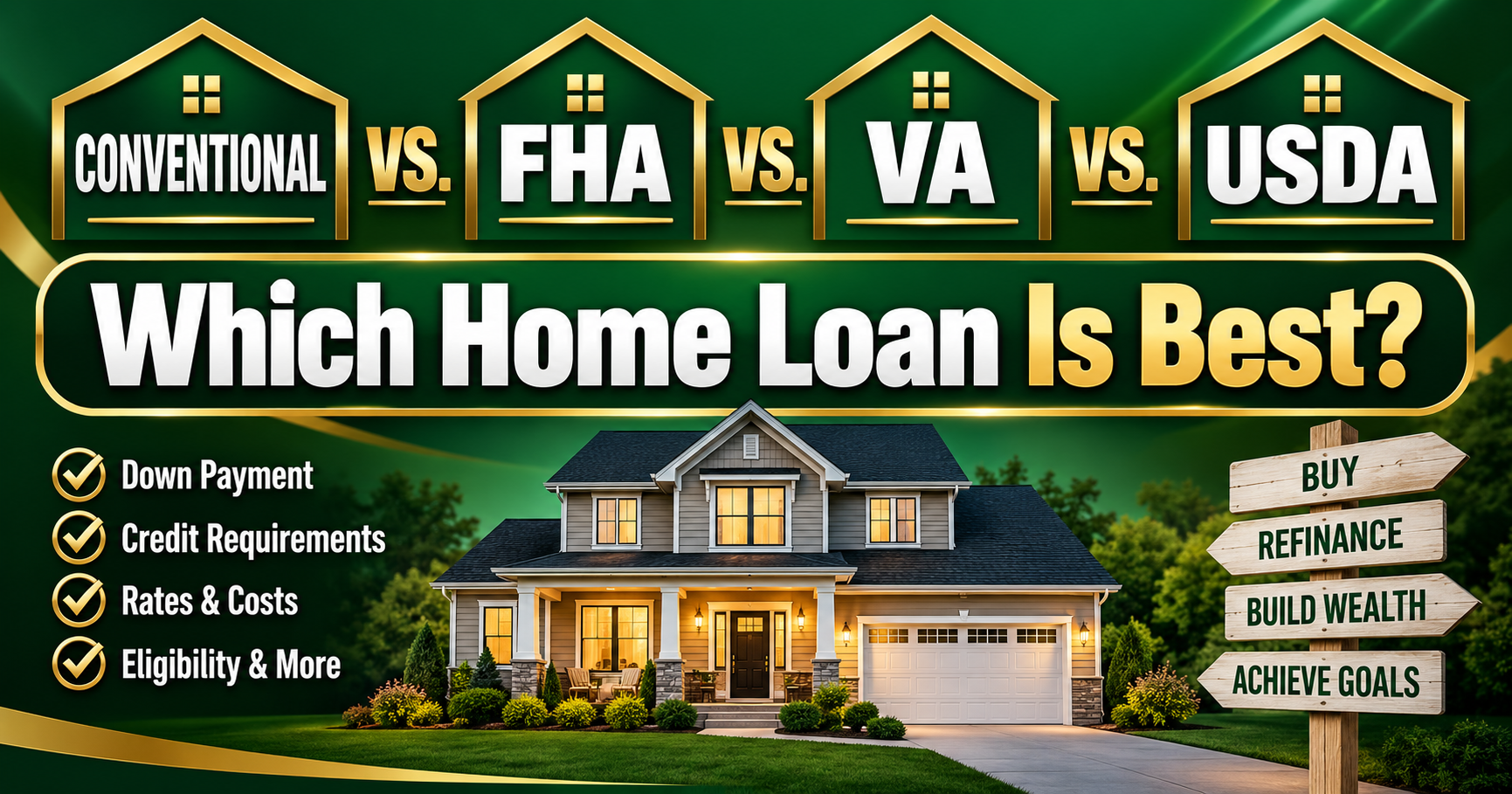
Conventional, FHA, VA, USDA — How Do These Loan Programs Compare?
Choosing the right mortgage program can make a major difference in your down payment, monthly payment, qualifying requirements, and overall loan costs. Conventional, FHA, VA, and USDA loans each have different advantages and restrictions.
What to know
Conventional loans offer flexibility — Down payments can start as low as 3%, and conventional financing can be used for primary residences and investment properties.
FHA loans can be easier to qualify for — FHA allows a 3.5% minimum down payment and can be more forgiving of lower credit scores, higher debt ratios, and previous credit problems.
VA loans offer zero-down financing for eligible veterans — VA loans generally offer competitive rates, flexible qualifying guidelines, and no down payment for eligible borrowers with full entitlement.
USDA loans offer zero-down financing in eligible areas — USDA loans can provide 100% financing, but household income, property location, debt ratios, and other restrictions apply.
Property requirements vary by loan program — Conventional financing is generally more flexible regarding property condition, while FHA, VA, and USDA may have additional appraisal, inspection, or repair requirements.
The lowest rate doesn't always mean the lowest-cost loan — Mortgage insurance, guarantee or funding fees, down payment, credit score, and other costs should be considered when comparing programs.
Lender overlays can affect qualification — Individual lenders may impose requirements that are stricter than the basic guidelines established for a loan program.
1. Conventional loans offer flexibility
Conventional loans generally follow guidelines established by Fannie Mae and Freddie Mac. Down payments can start as low as 3%, and borrowers may qualify with credit scores beginning around 620.
Conventional financing can be particularly attractive for borrowers with stronger credit and is generally more flexible when it comes to property condition. It can also be used to purchase investment properties, unlike FHA, VA, and USDA financing.
Borrowers putting less than 20% down will generally have mortgage insurance. For someone with a lower credit score and a small down payment, FHA financing may sometimes be more cost-effective.
2. FHA loans can be easier to qualify for
FHA loans are insured by the Federal Housing Administration and allow down payments as low as 3.5%.
FHA financing can be a good option for borrowers with lower credit scores, higher debt-to-income ratios, or previous credit problems such as bankruptcies or foreclosures.
FHA loans require an FHA appraisal and have mortgage insurance costs. FHA appraisers may also require repairs or additional inspections when a property has health, safety, or deferred-maintenance issues.
Because FHA interest rates can be lower than conventional rates, FHA may sometimes cost less overall for a borrower with a lower credit score despite its mortgage insurance expenses.
3. VA loans offer zero-down financing for eligible veterans
VA financing is available to eligible veterans, active-duty service members, and certain other qualified borrowers.
Eligible borrowers may purchase a home with no down payment, and a veteran with full entitlement generally isn't subject to a VA loan limit. VA loans can also provide competitive interest rates and flexible debt-to-income and credit guidelines.
VA properties must meet specific minimum property requirements. Repairs identified through the appraisal or lender review may have to be completed before closing.
VA loans can also include a funding fee. Some eligible veterans are exempt from paying this fee.
4. USDA loans offer zero-down financing in eligible areas
USDA Guaranteed loans can provide 100% financing for qualified borrowers purchasing eligible properties.
Unlike most conventional, FHA, and VA loans, USDA has household income limits. The property must also be located in a USDA-eligible area.
USDA financing includes an upfront guarantee fee and an annual fee collected as part of the monthly payment. USDA also generally has tighter debt-ratio requirements than some other loan programs.
Additional restrictions can apply to property ownership, available liquid assets, manufactured homes, wells, and properties containing income-producing or commercial-use features.
5. Property requirements vary by loan program
The type and condition of the property can influence which mortgage program works.
Conventional loans generally have more relaxed property-condition requirements, although health and safety problems can still require repairs.
FHA, VA, and USDA programs may have more specific appraisal and property requirements. Manufactured homes can also have additional requirements depending on the program.
This is why the property should be considered along with the borrower's income, credit, assets, and down payment when selecting a loan.
6. The lowest rate doesn't always mean the lowest-cost loan
Interest rate is only one part of comparing mortgage programs.
A loan with a lower interest rate may have mortgage insurance, an upfront fee, a funding fee, or other costs that affect the total price of the loan.
The best comparison looks at the interest rate, lender fees, mortgage insurance, required down payment, monthly payment, and overall cost—not simply the advertised rate.
7. Lender overlays can affect qualification
Fannie Mae, Freddie Mac, FHA, VA, and USDA establish baseline guidelines, but individual lenders can impose additional requirements known as overlays.
For example, a loan program may technically allow a particular credit score, debt ratio, property type, or borrower situation, while an individual lender has stricter requirements.
That means being turned down by one lender doesn't necessarily mean you don't qualify for the loan program. Another lender may interpret the guidelines differently or have fewer overlays.
Bottom line
There isn't one mortgage program that's right for every borrower. Conventional, FHA, VA, and USDA loans have different down payment requirements, costs, credit guidelines, property rules, and qualifying standards.
The key is to compare the programs based on your credit profile, income, available funds, property, monthly payment, and total loan cost before deciding which financing option makes the most sense.
- #loan programs
- #FHA loan
- #USDA loan
- #VA Loan
- #Conventional Loan
More Loan Program tips guides
Disclaimer: Informative opinion based on decades of experience, not legal advice. Guidelines change and lenders differ in their interpretation and overlays — verify details with the lender handling your loan.